Porgai Artisans Association
India | Lambadi Hand Embroidery
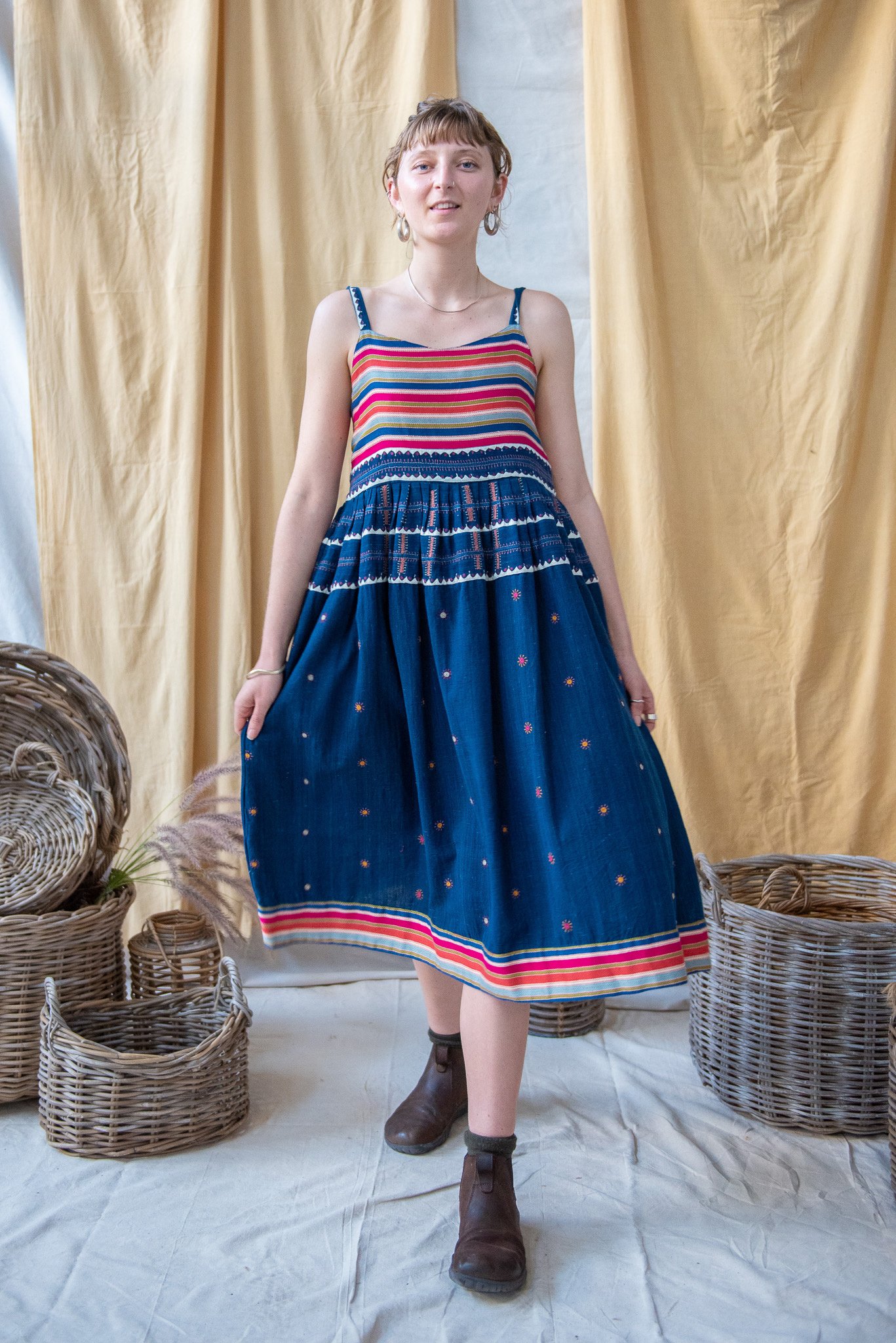
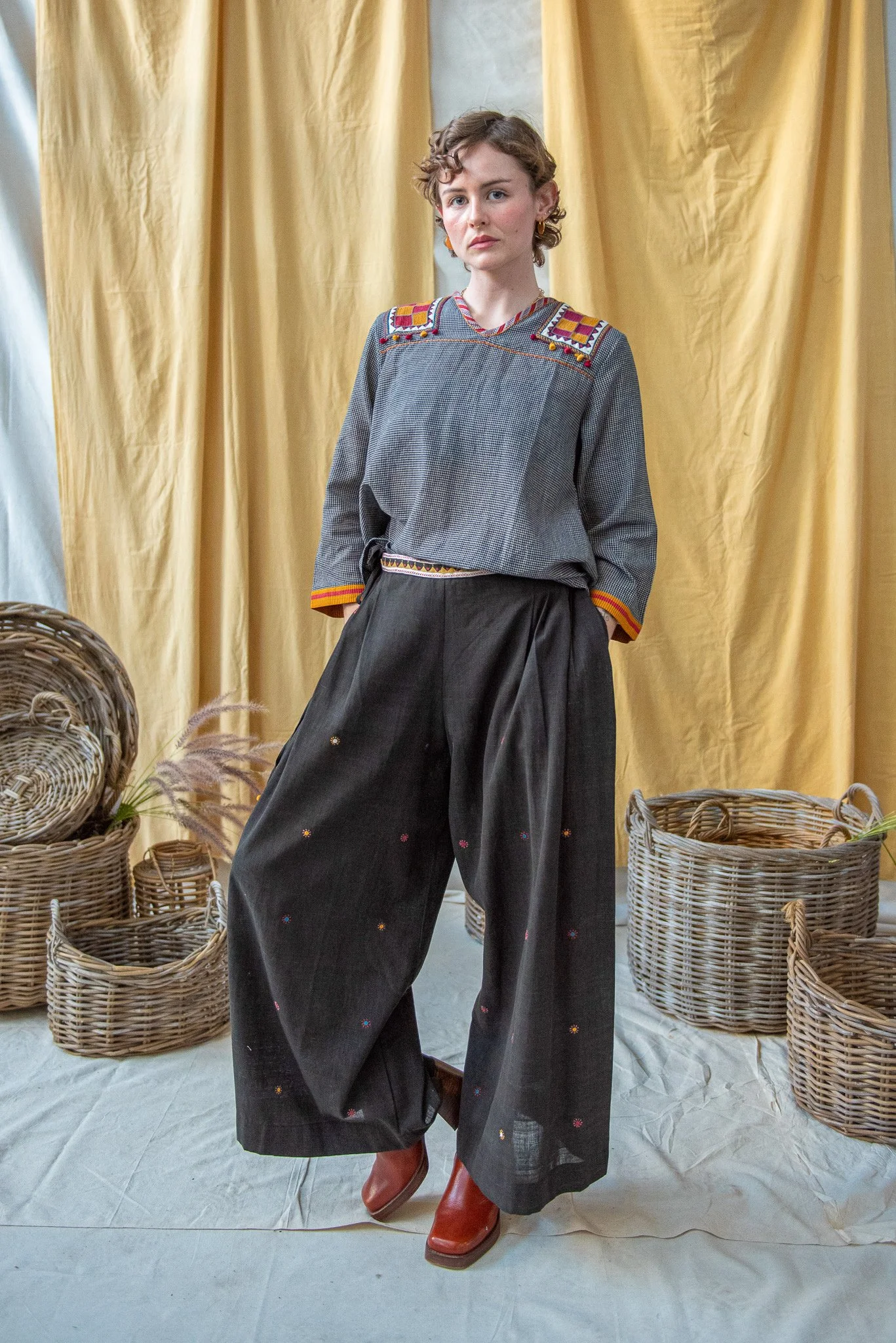
Porgai Artisans Association is a women-led cooperative based in the Sittilingi Valley in Tamil Nadu, India, working to sustain traditional Lambadi hand embroidery. The association is rooted in the Lambadi community, a historically nomadic group for whom embroidery once played a central role in clothing, daily life, and movement across regions.
As Lambadi women settled into agrarian life and adopted new forms of dress, the embroidery nearly disappeared. In the mid-2000s two women from the community, Neela and Gammi, began relearning the craft from their grandmothers and documenting stitches from surviving antique textiles collected across Tamil Nadu. That work became the foundation for what is now Porgai, the cooperative founded byNeela and Gammi.
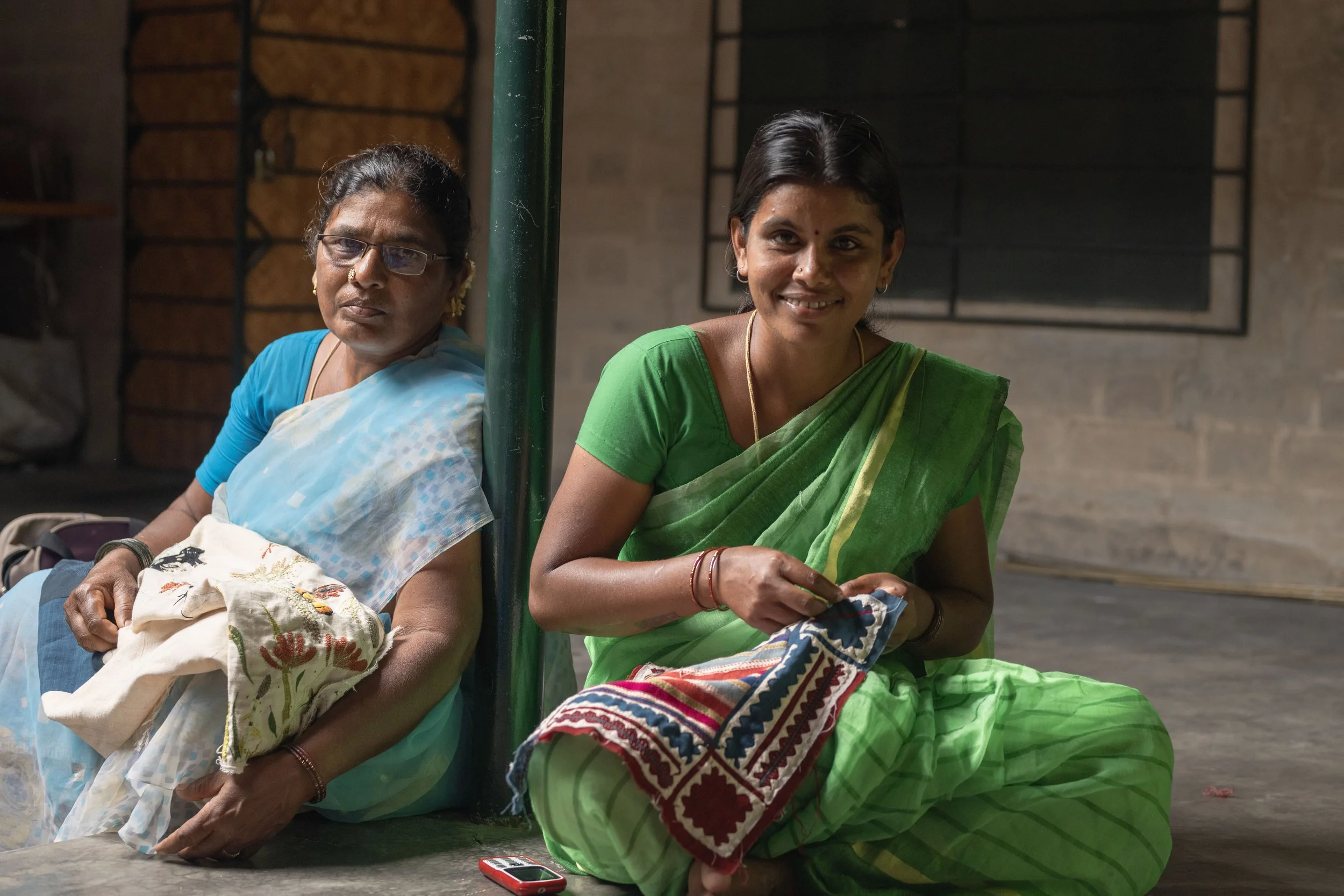
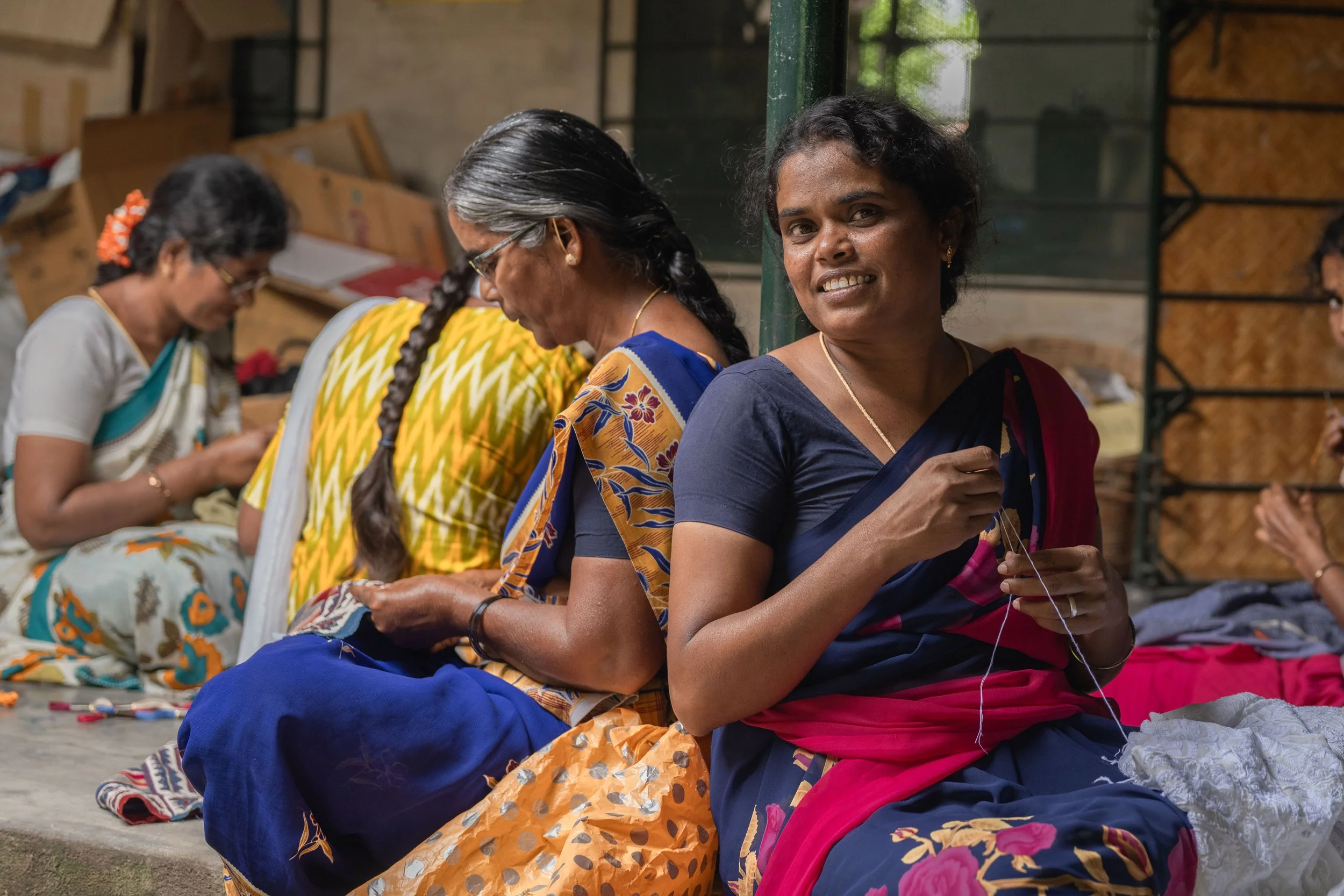
Today, the cooperative includes more than seventy artisans, the majority of them women, who embroider from their homes while continuing agricultural work. This structure allows families to remain in their villages rather than migrating for labor. Income from embroidery supports food, healthcare, education, and daily needs, particularly in a region where farming income is increasingly uncertain.
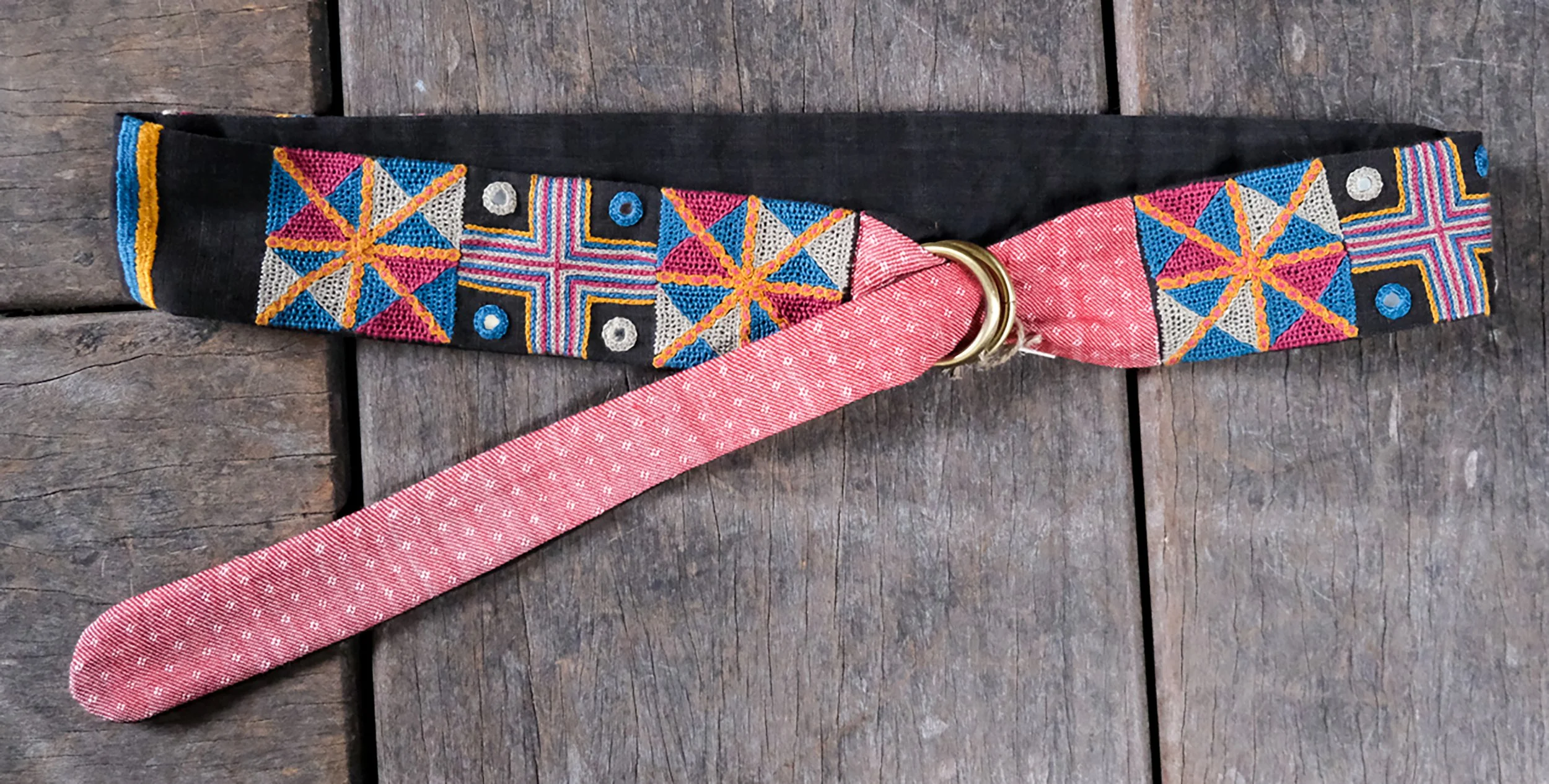
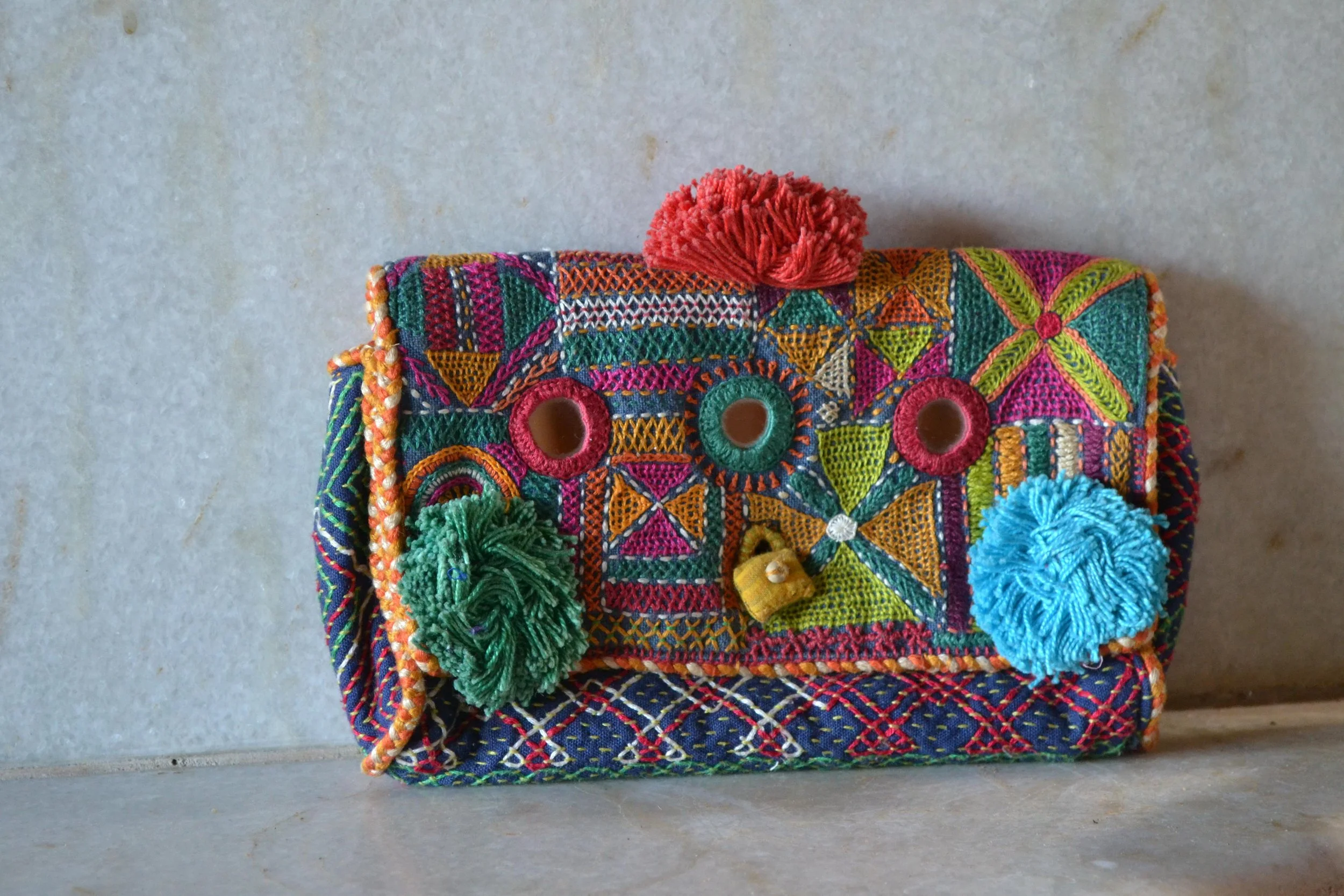
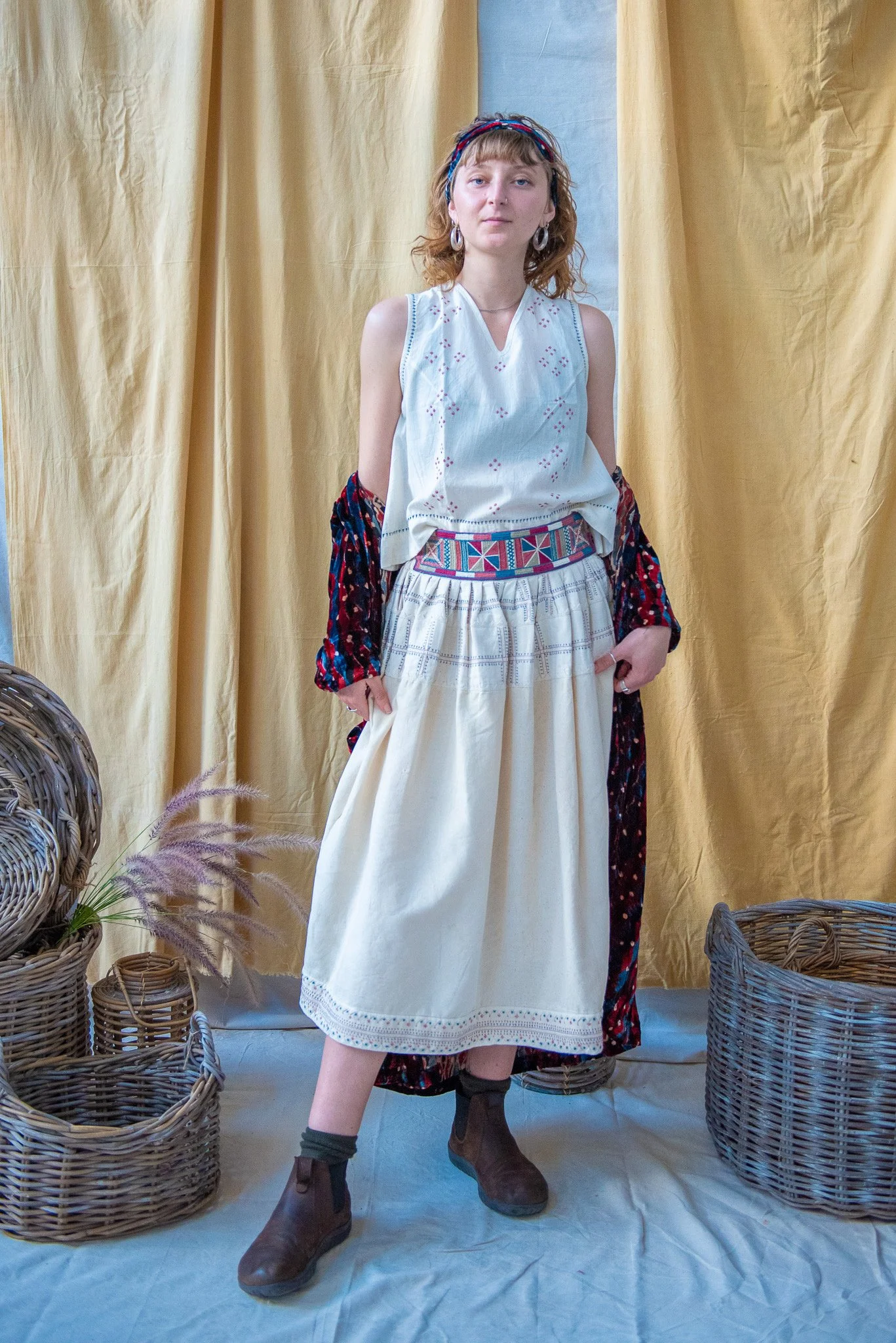
Lambadi embroidery is dense and highly structured. It uses a repertoire of forty-two traditional stitches arranged through geometric forms such as squares, triangles, and layered borders. Surfaces are often fully covered. Cowrie shells, coins, mirrors, bells, and hand-made thread beads are used as integral elements, reflecting both skill and cultural meaning.
The cooperative operates as a collective system. Members receive skill training, healthcare support, access to savings and credit, childcare, and opportunities for advancement. All artisans hold bank accounts and participate in group savings, and several children of Porgai artisans are now pursuing higher education in textile and design fields.
Materials are sourced locally whenever possible. Organic cotton grown in the valley is hand-spun, hand-woven, and naturally dyed within Tamil Nadu. Fabric and thread waste is reused, keeping production low-impact.