Shivani Thakur, Priyanka Kotwal, Suma Devi | The Woolknitters
India | Carpet Weaving & Hand Knitting
The Woolknitters is a women-led social enterprise based in the mountain villages of Kullu district in Himachal Pradesh, northern India. Their work is rooted in the wool traditions of the Himalayas, where spinning, knitting, and weaving have long been part of daily life, especially for women living in remote, high-altitude communities.
In Himachal Pradesh, most families depend on farming, orchards, and livestock, such as sheep and cattle, for their primary source of income. Winters here are long and severe. For generations, women spun local sheep and yak wool to make clothing, blankets, and carpets for their families. These skills were passed down at home, learned by watching mothers and grandmothers work. Over time, the women involved began to recognize that this work was not just about survival, but about identity and culture. Outside their homes, however, these skills were rarely valued, and opportunities to earn from them were limited.
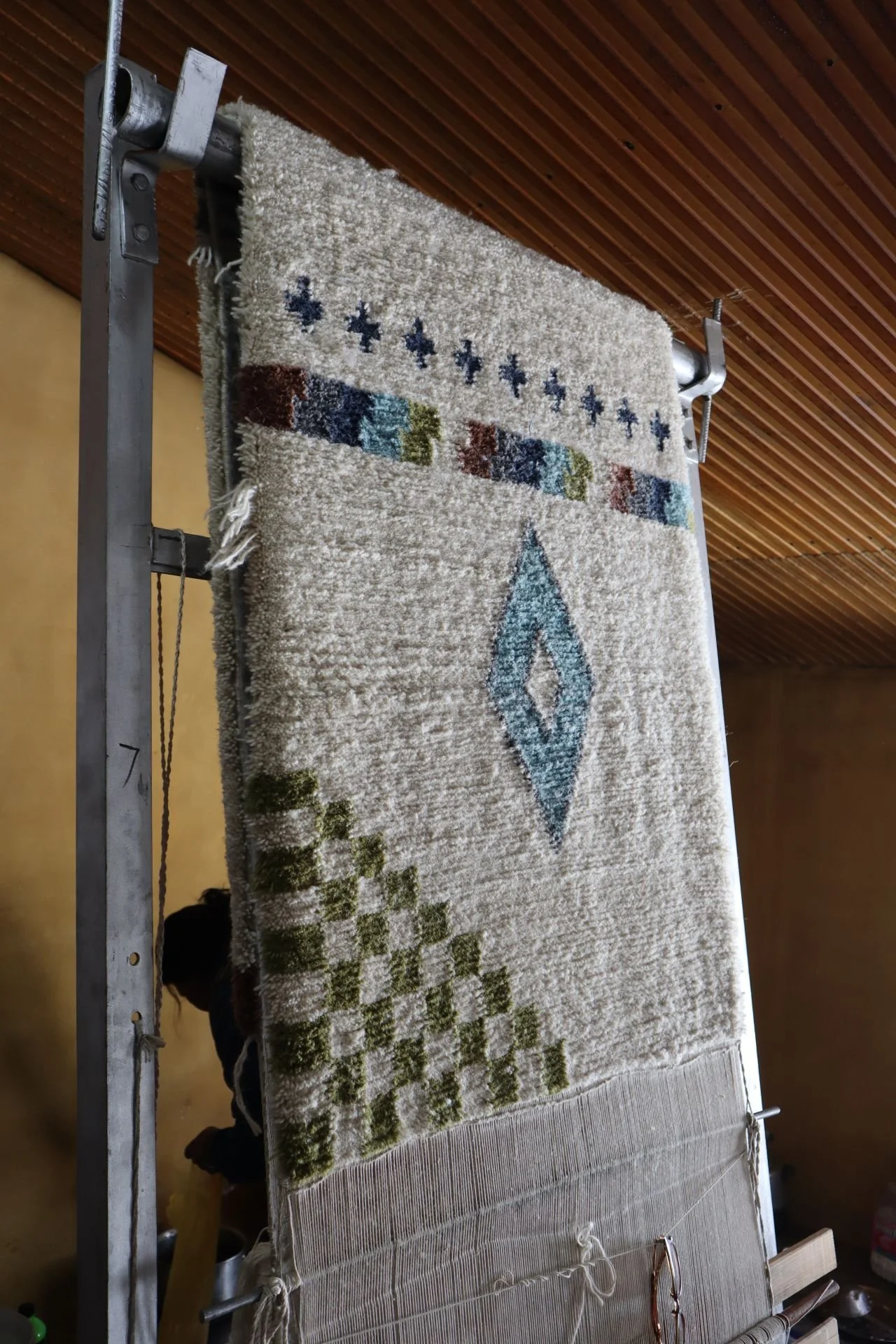
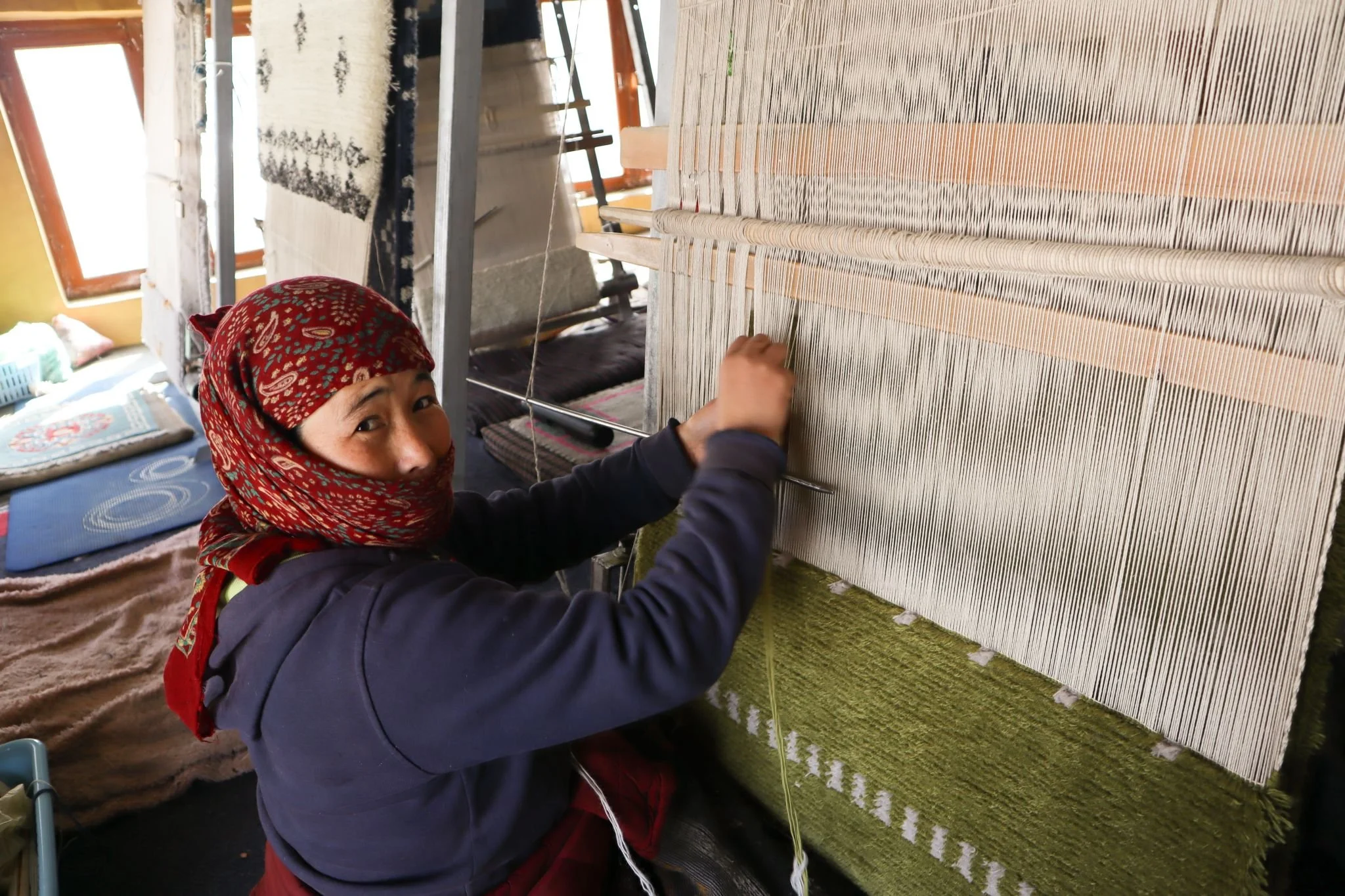
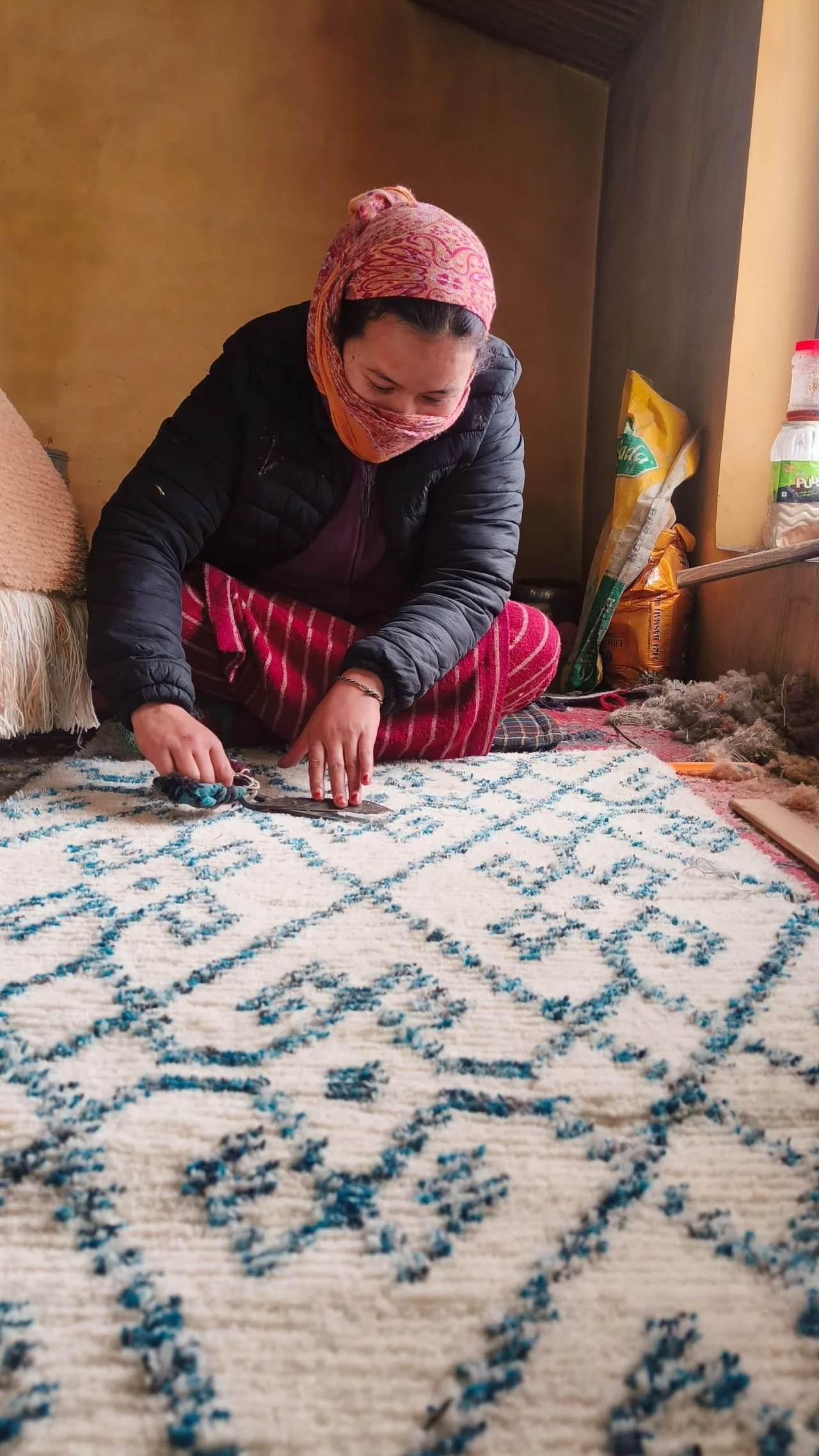
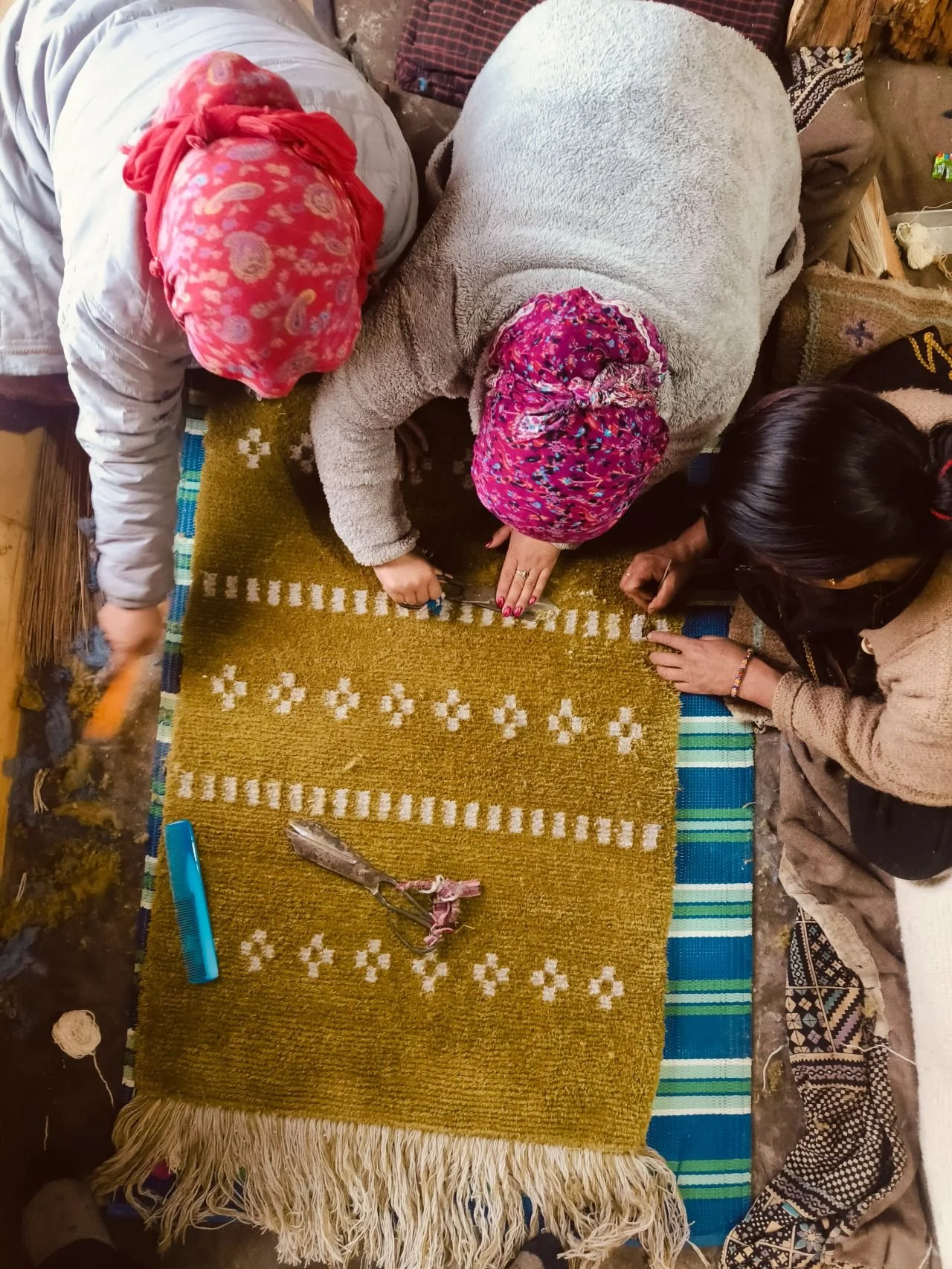
The Woolknitters grew out of that realization. Today, the cooperative works with more than 200 artisans, the majority of them women, across multiple villages. The collective works across multiple wool traditions, including hand knitting, handloom weaving, hand spinning, Tibetan tsug den carpet weaving, and crochet. Their work brings together fine Merino wool and indigenous Himachali sheep and yak wool, with a strong focus on reviving local fibers which had been undervalued or discarded.
Most of the artisans involved are women from remote villages where paid work options are limited. Craft is done from homes and small workshops, allowing women to balance agricultural and family care work.
Material sourcing and process are central to the work. Wool is sourced directly from local shepherds and processed by hand using drop spindles, spinning wheels, and wooden looms. Natural fibers are used exclusively, and natural dyeing is practiced wherever possible. Because production is hand-based, waste is minimal, and leftover yarns and fibers are reused in smaller items and samples.
The Woolknitters also invest heavily in skills training. Women are trained not only in knitting, weaving, spinning, and carpet making, but also in finishing, quality control, and new product formats. Experienced artisans take on leadership roles as trainers and group coordinators, creating clear pathways for advancement within the collective.
Designs are inspired by the mountain landscape and daily life in Himachal Pradesh; motifs are drawn from snowflakes, pine trees, rivers, animals, and traditional geometric borders. At its core, The Woolknitters turn long-held household skills into steady, dignified work, while keeping Himalayan wool traditions active and visible in the places where they began.