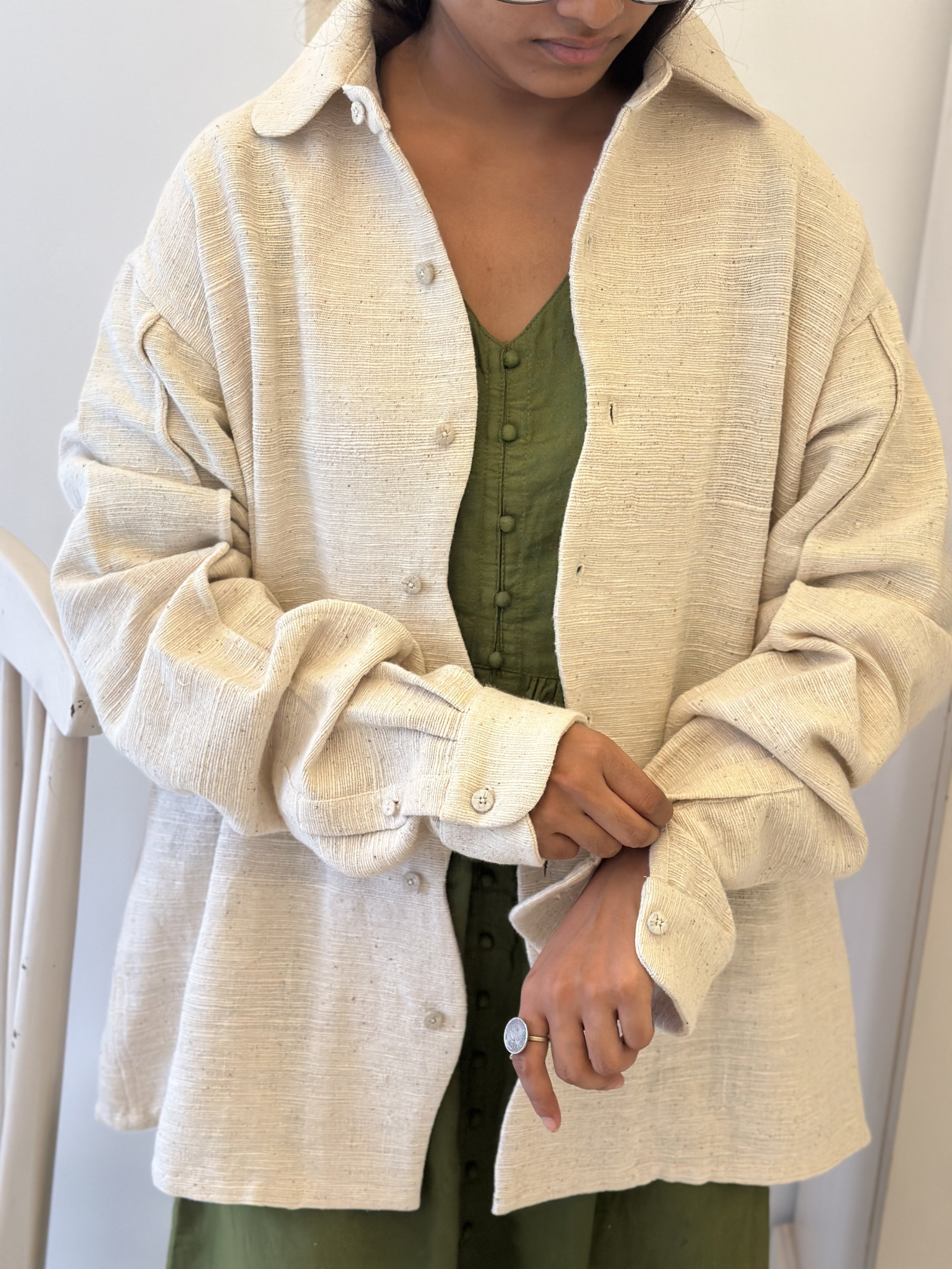
Padmaja
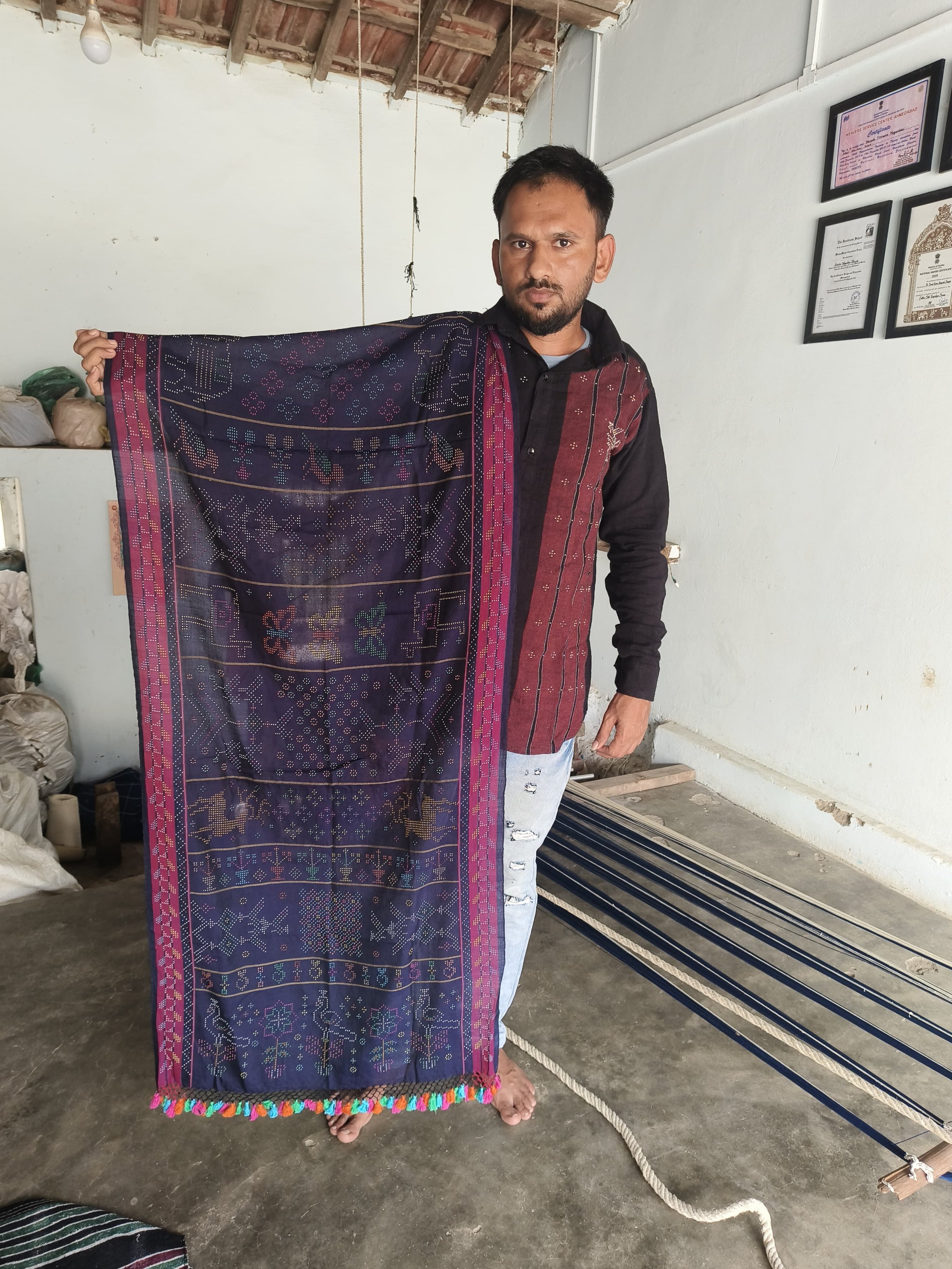
India | Tangaliya Weaving
Padmaja is a textile and fashion label founded by designer Padmaja Krishnan, who is based in Mumbai and has spent more than two decades working closely with weaving communities across India. Her practice sits at the intersection of contemporary design and deeply skilled handloom traditions, with a long-term commitment to endangered textiles that require both technical precision and sustained collaboration to survive.
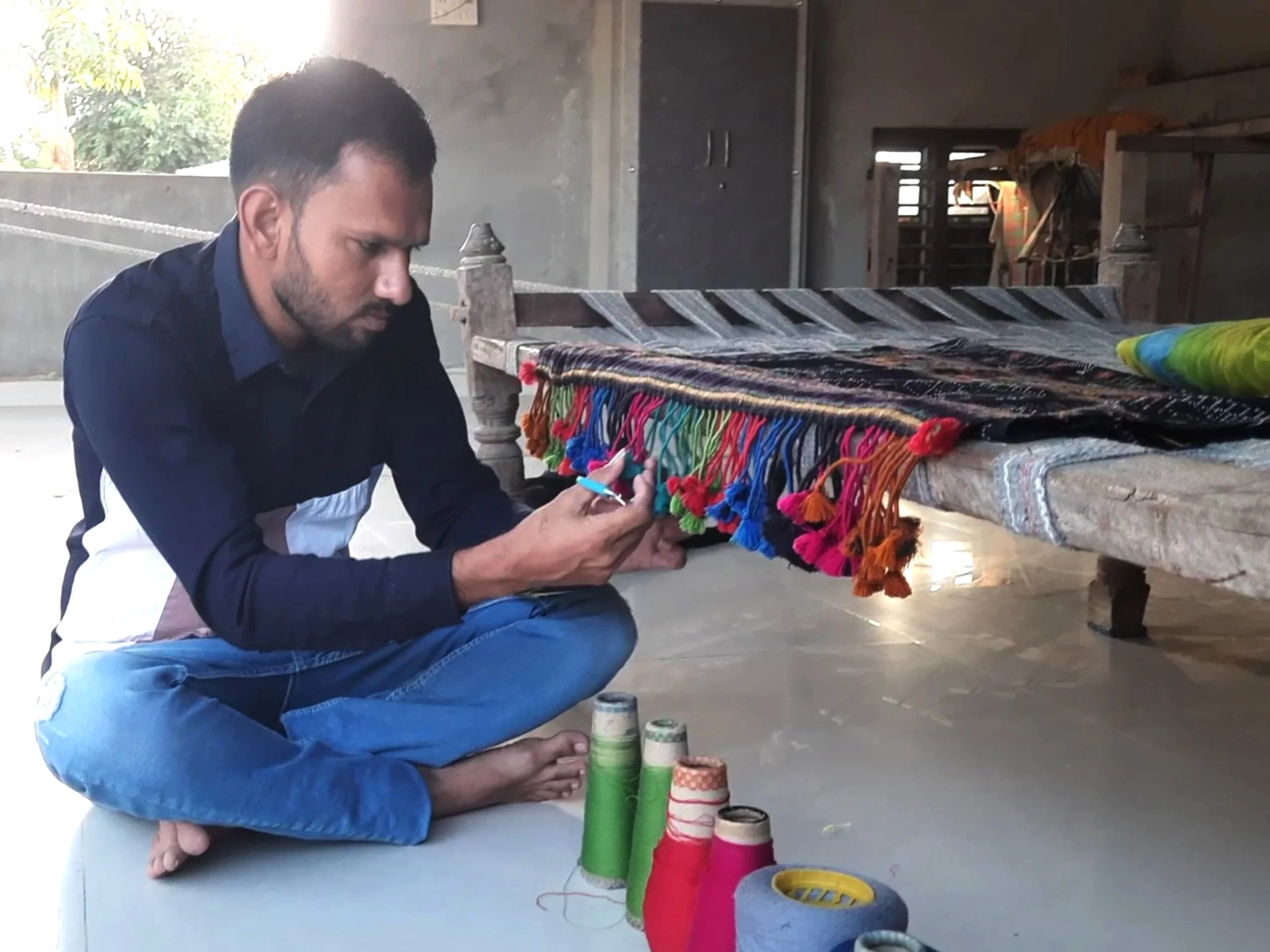
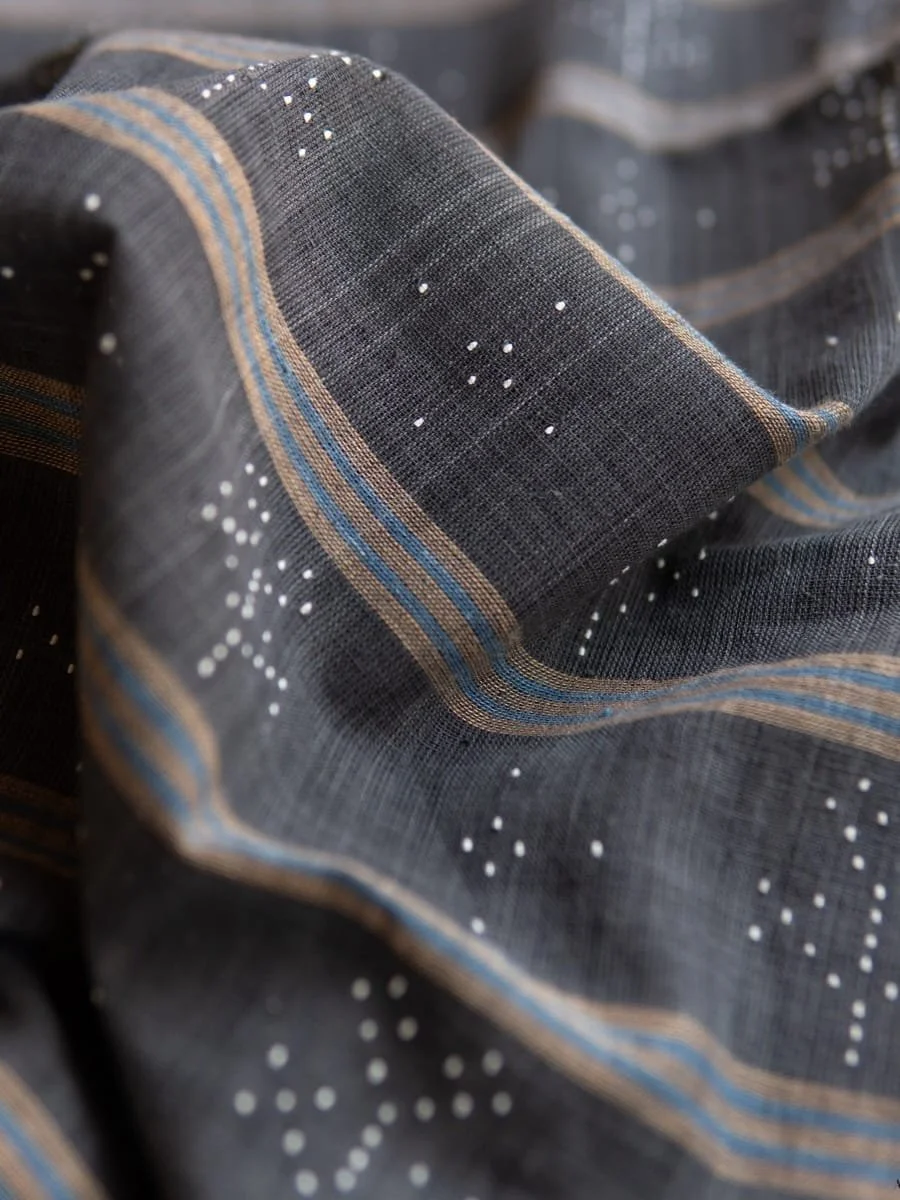
Padmaja’s work with Tangaliya weaving began through the guidance of her mentor, Professor Krishna Patel, who encouraged her to take on this rare and demanding craft. Tangaliya is a 700-year-old textile tradition from Gujarat, practiced today by fewer than 100 families located primarily within the pastoral Dangasia and Bharwad communities. The weave is immediately recognizable for its raised, bead-like dots, known as daanas, created through an extra-weft technique which produces identical patterns on both sides of the cloth without the use of knots. This level of accuracy cannot be replicated by a machine and requires exceptional skill from the weaver.
Padmaja works directly with Tangaliya weavers in Gujarat, collaborating closely on sampling, development, and production planning. She currently works with 18 weavers and is focused on expanding this group while maintaining the technique's integrity and difficulty. The textiles are woven using indigenous kala cotton, a fiber native to the region, known for its strength and texture. Kala cotton declined sharply during the colonial period but is now being actively revived through projects like this one. Padmaja also works with natural fibers such as mulberry and eri silk, and uses either natural dyes or azo-free dyes exclusively.
The motifs woven into Tangaliya textiles are drawn from the weavers’ surroundings and daily lives. Traditional forms include geometric shapes and symbols such as peacocks, temples, trees, and local crops. Padmaja has introduced new motifs, including animals and vehicles, reflecting changes in the landscape and the lived realities of the weaving communities.
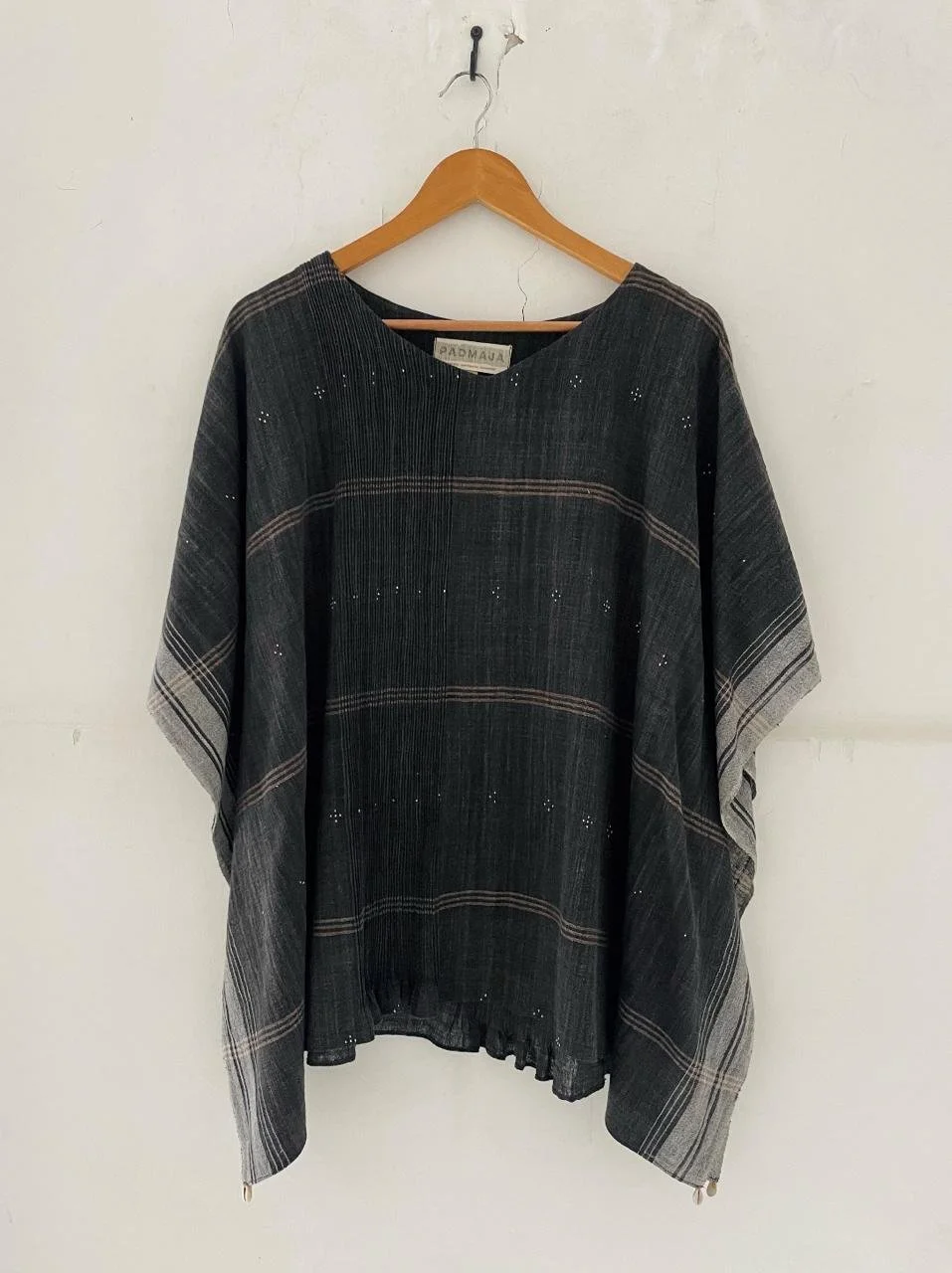
While firmly rooted in handloom, Padmaja’s work is unmistakably contemporary. Her garments emphasize form, proportion, and texture over surface embellishment. Padmaja works directly with artisan clusters rather than through intermediaries, paying sustainable wages that reflect time, skill, and expertise. She prioritizes long-term relationships and consistent work, helping reduce the pressure for artisans to leave their communities in search of unstable urban employment. In addition to weaving, her collaborations support training, finishing skills, and improved working conditions.
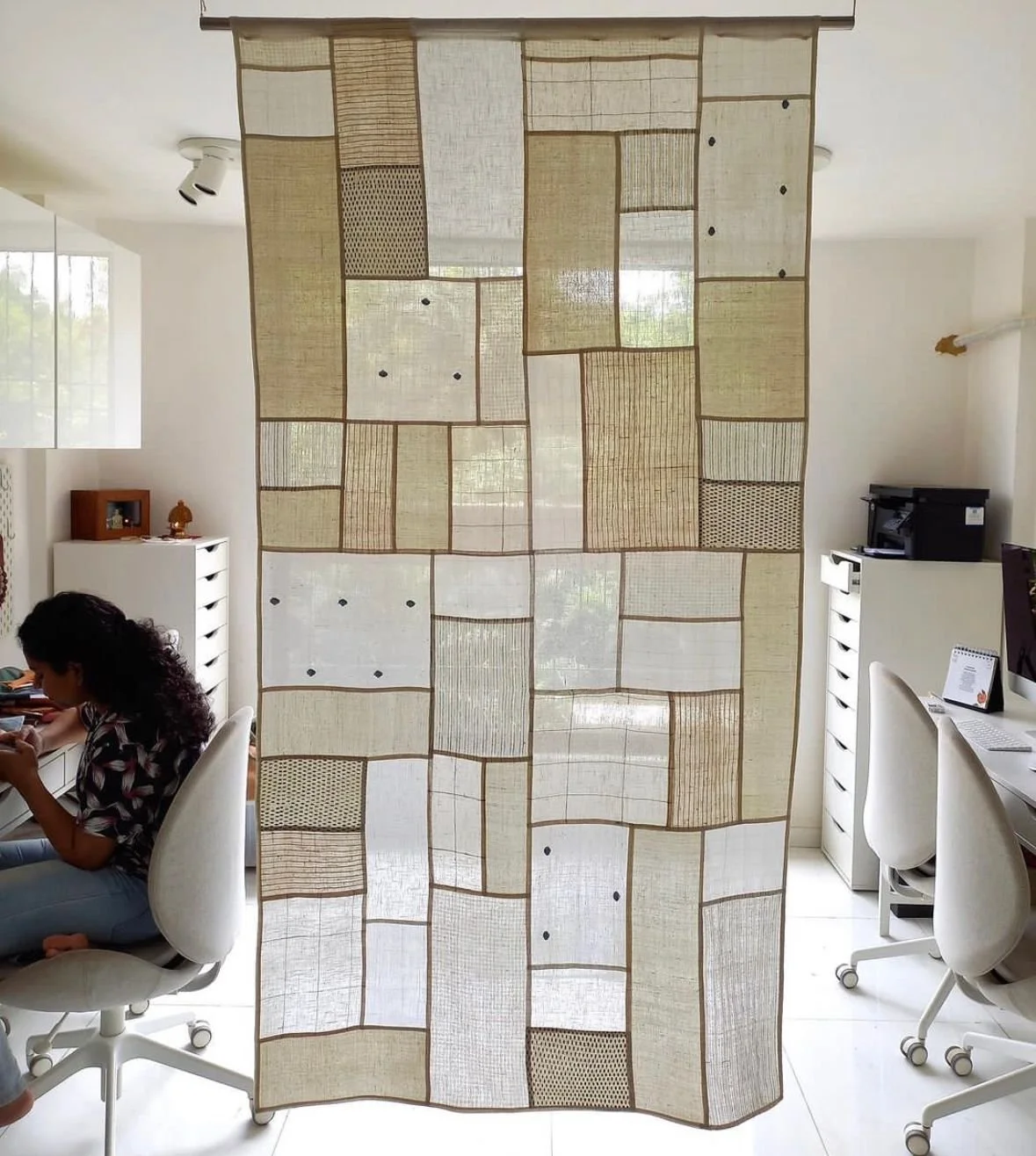
The studio operates with a near-zero waste approach, using only handwoven textiles, much of it handspun, and finding value in irregularities rather than discarding them.