Bula Mats
Fiji | Pandanus Fiber Mat Weaving
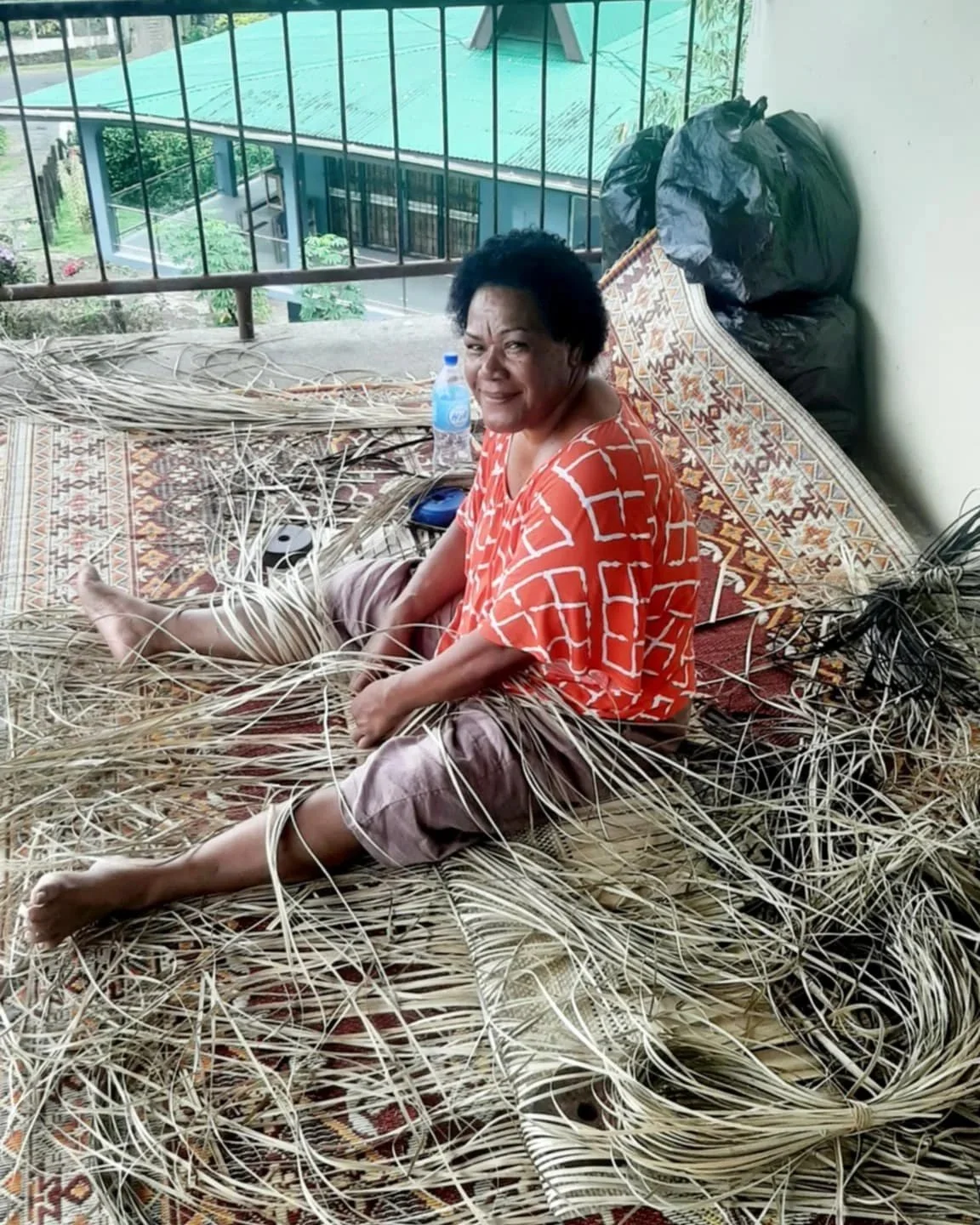
Bula Mats is led by weaver Adi Vukivuki Tubuna, whose work marks the first time artisans from Fiji will be represented at the International Folk Art Market.
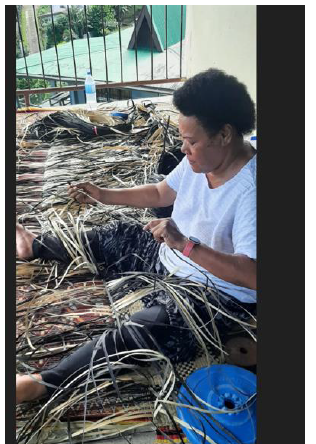
Adi was born and raised in a village where mat weaving was part of everyday life. From a young age, she learned from watching the women in her family and community, especially her grandmother, who taught her how to prepare and weave pandanus leaves. These skills were passed on through observation and practice, learned over time rather than through formal instruction.
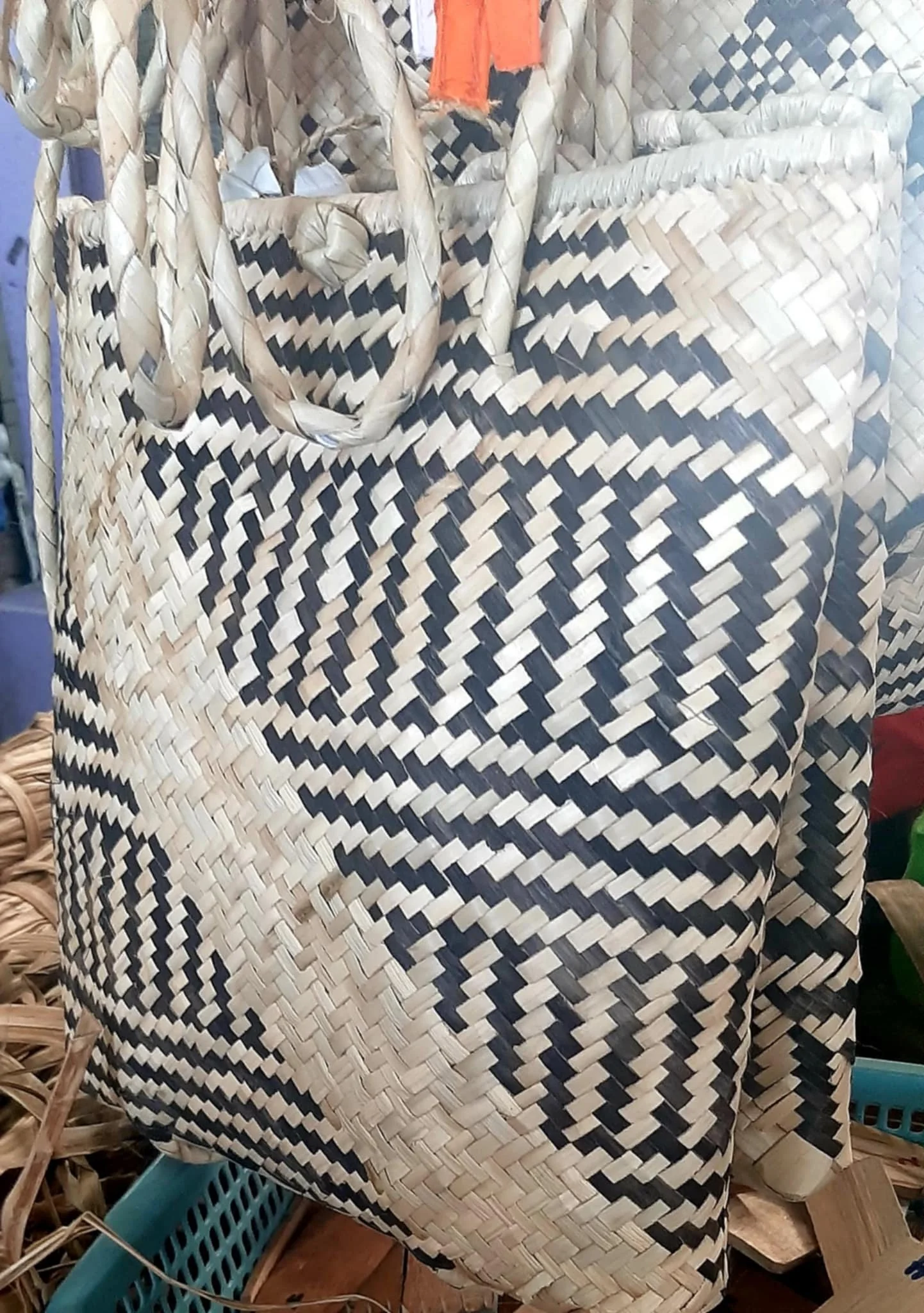
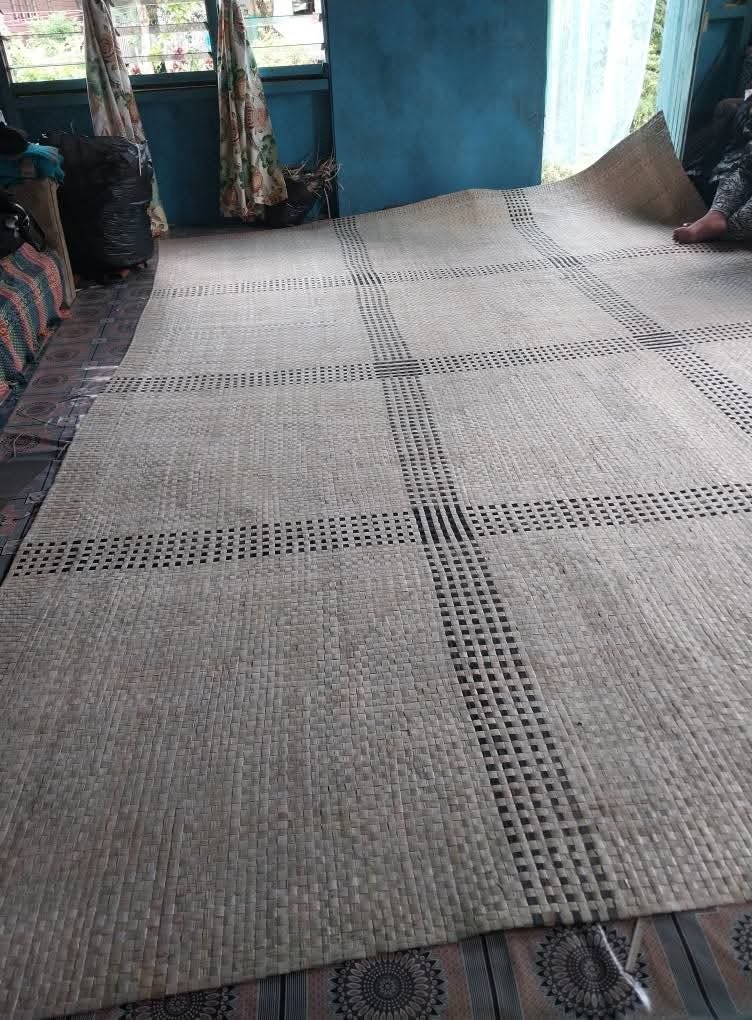
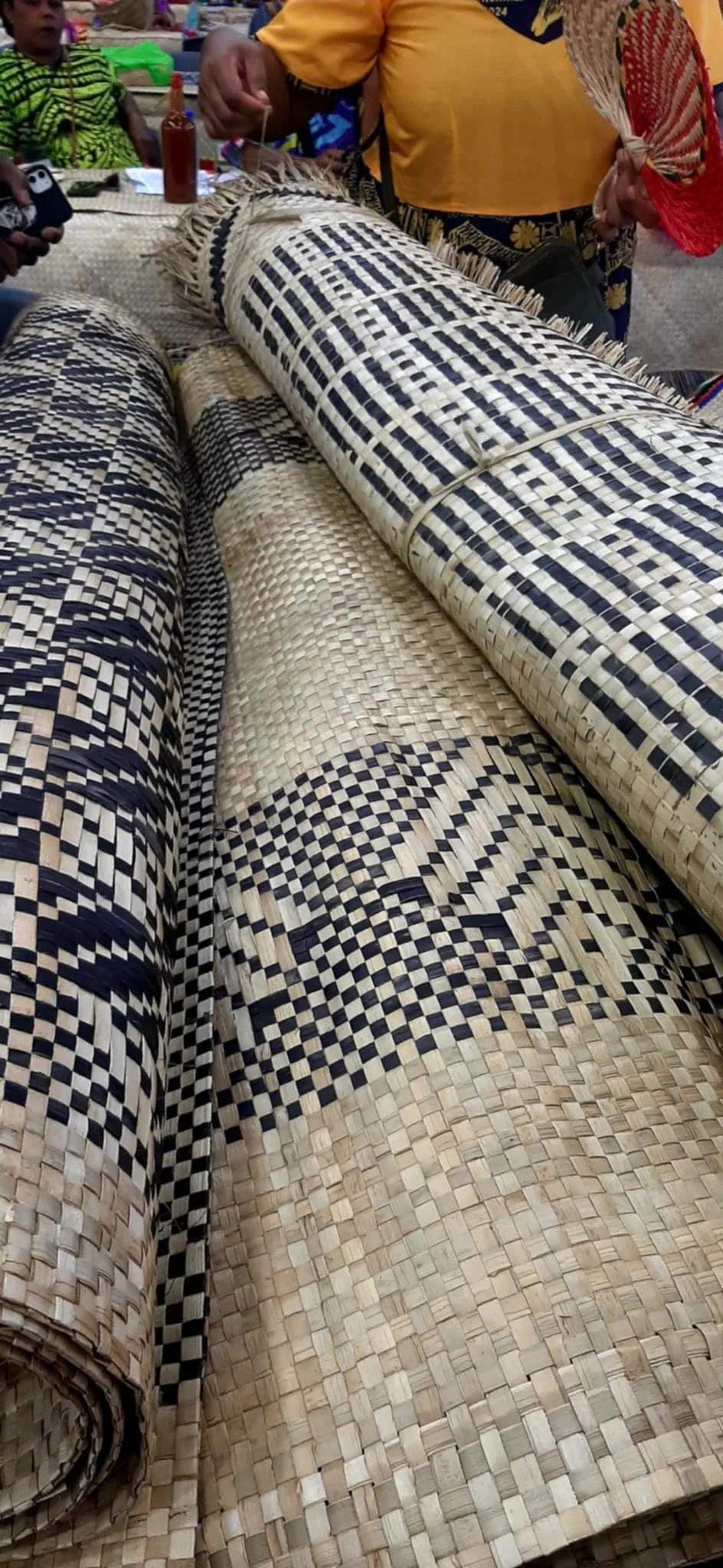
Traditional Fijian mats are woven from pandanus leaves which are harvested locally and prepared by hand. The leaves are stripped into fine strands, rolled, and woven using techniques passed down through generations by women. The work is slow and physically demanding, requiring patience, consistency, and precision. Each mat is made entirely by hand, without machines or synthetic materials.
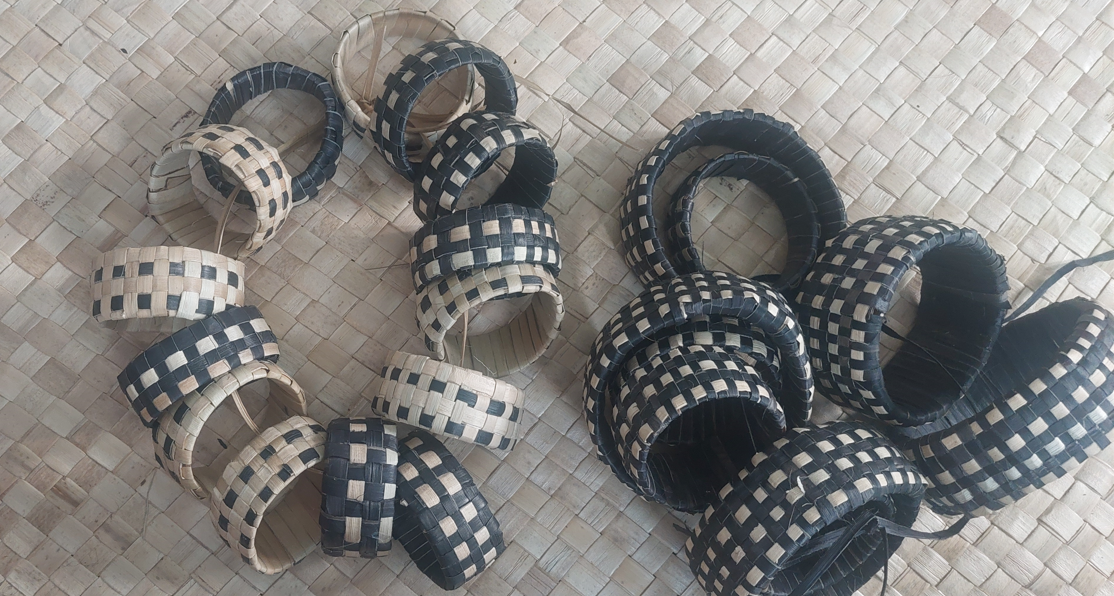
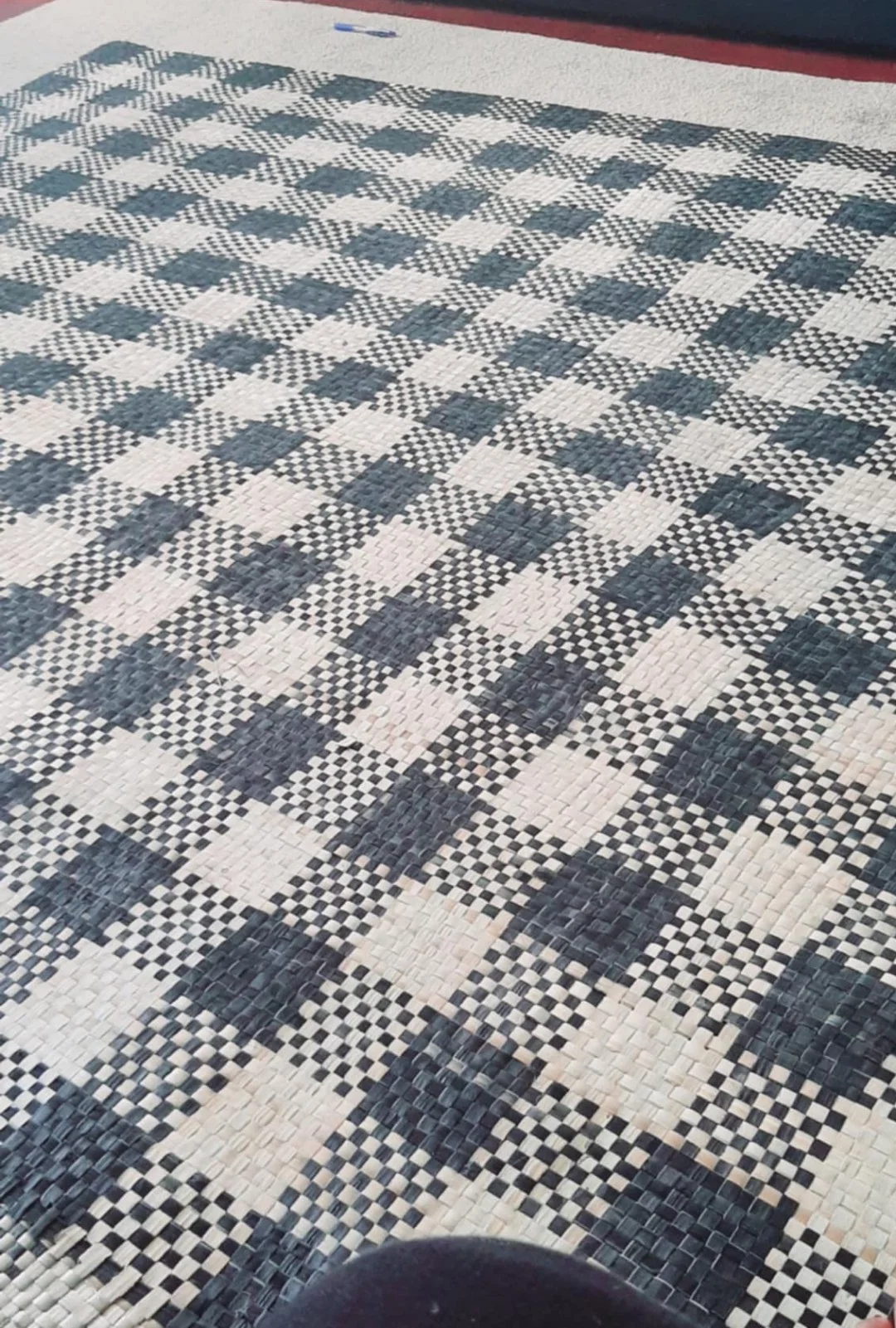
The designs are built from geometric forms that carry meaning within Fijian culture. Parallel lines, chevrons, and cross forms appear throughout the work, representing continuity, connection, and the movement of energy between people and their environment. Checkerboard patterns symbolize balance and order and are often associated with social and spiritual structure. These patterns are used intentionally and are understood within the community as more than decoration.
Adi’s work has developed over time through careful adjustments in scale, layout, and composition. While the techniques remain traditional, she adapts her designs so the mats can be used in contemporary settings, like her local hotel clients, without losing their cultural grounding. She describes her role as connecting traditional knowledge with audiences beyond her community.
Bula Mats works with women from the local community through a women’s club, organizing teams of skilled mat weavers to collaborate on shared projects. The income earned supports families directly, particularly their children’s education expenses such as school uniforms, transportation, supplies, and lunches.
Bula Mats pays fair wages which are set to reflect the time and skill required for each piece, and relationships are built with the intention of long-term collaboration rather than short-term production.
All materials are sourced within Fiji. Pandanus leaves are abundant locally and prepared using established methods. Foreign materials are avoided, keeping the work tied to local knowledge, local suppliers, and the rhythms of the place where it is made.