Narmohan Das
India | Silk Weaving
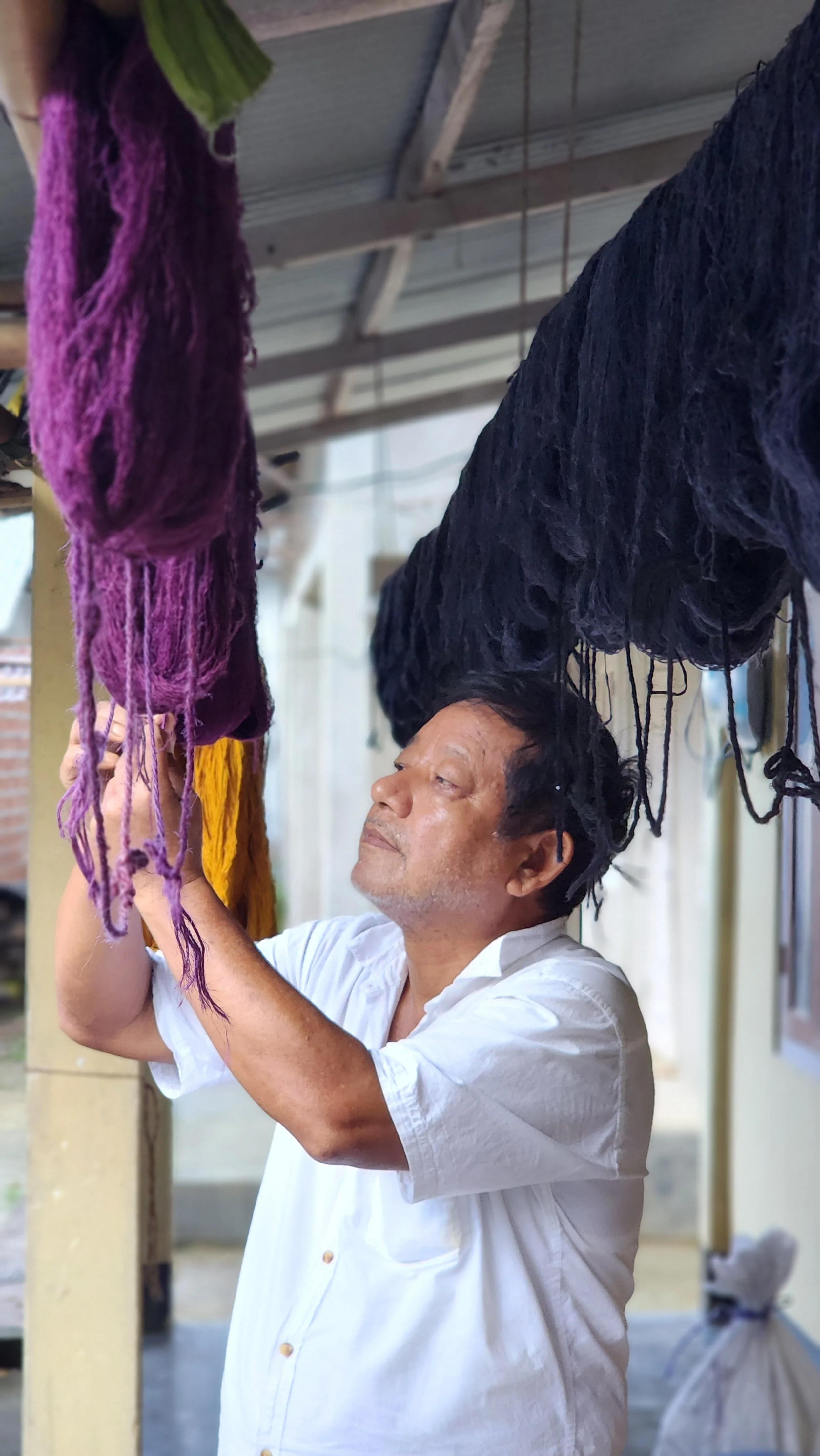
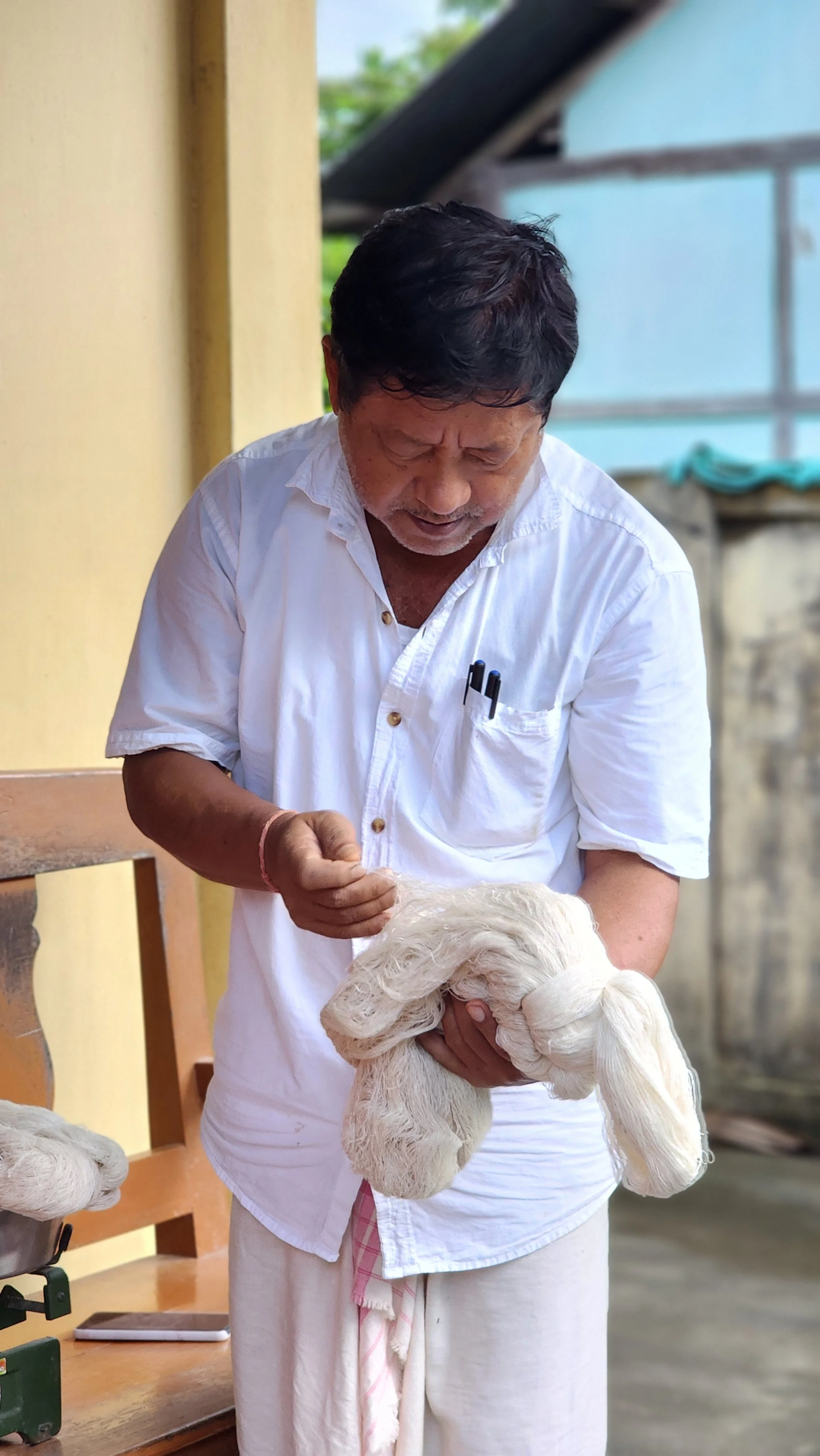
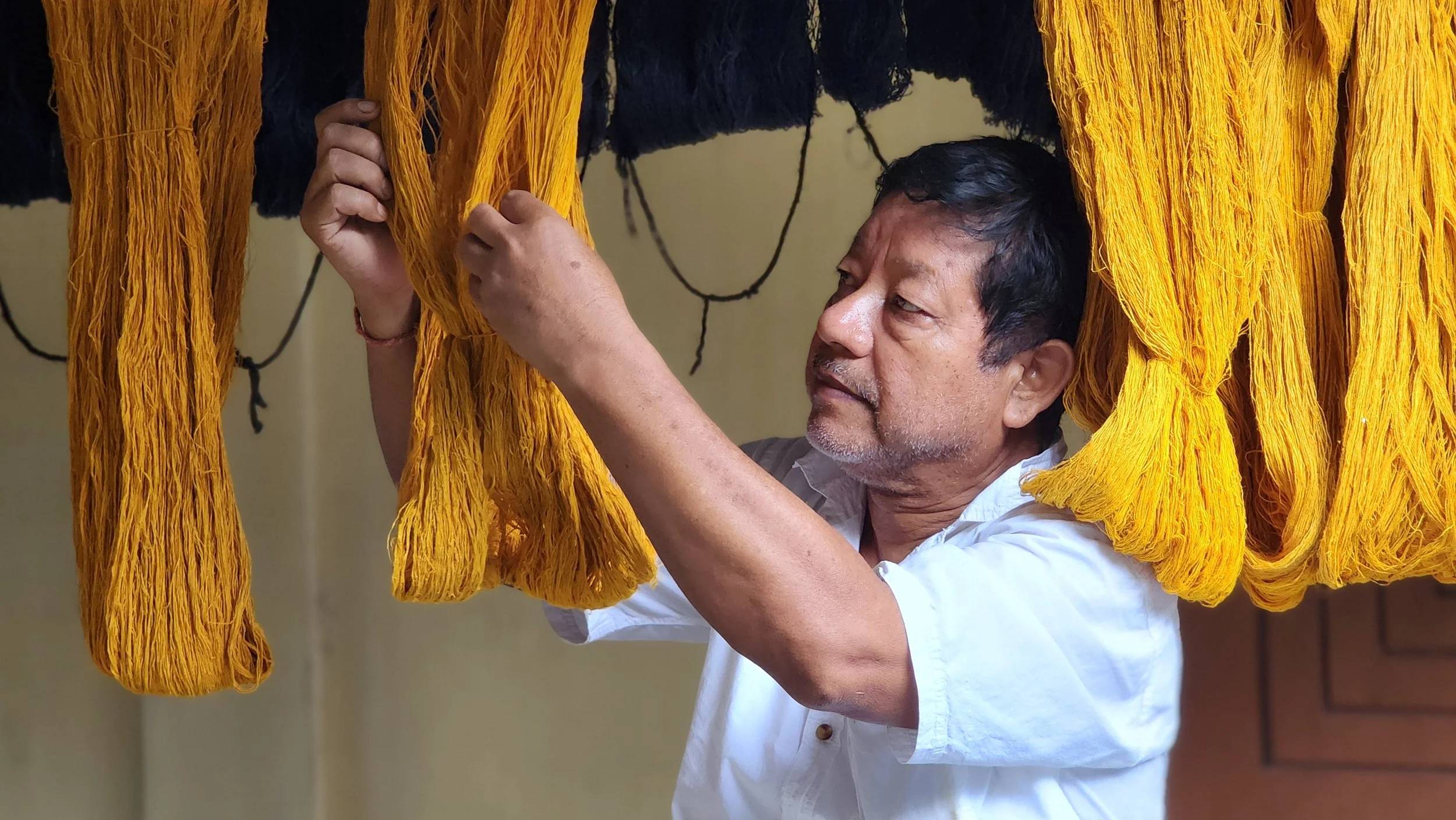
The textiles associated with Narmohan Das come out of a wide, rural network of silk rearers, spinners, dyers, and weavers across Assam. At the center of this work is the revival of indigenous silks, especially eri silk and the rare nuni pat, and the restoration of plant-based dye knowledge which had nearly disappeared from everyday practice.
For more than twenty-five years, Narmohan has worked at the intersection of craft, ecology, and livelihood, developing natural dye systems using materials such as lac, tea leaves, onion skins, marigold, and native flowers. These methods are chemical-free, low-water, and rooted in local availability, making them viable in flood-prone and climate-stressed regions of Assam.
Today, this work supports approximately 750 rural artisans, 740 of them women, who earn income through spinning, dyeing, and weaving. Many are from Indigenous communities where farming alone no longer provides stable livelihoods. Textile work supplements agricultural income and allows families to invest in education, healthcare, and food security.
Rather than operating as a centralized workshop, production is distributed across homes and village clusters. Training focuses not only on technique but also on costing, quality standards, and market understanding, enabling artisans to become independent producers over time. Several women trained through this network have gone on to establish their own weaving and dyeing enterprises.
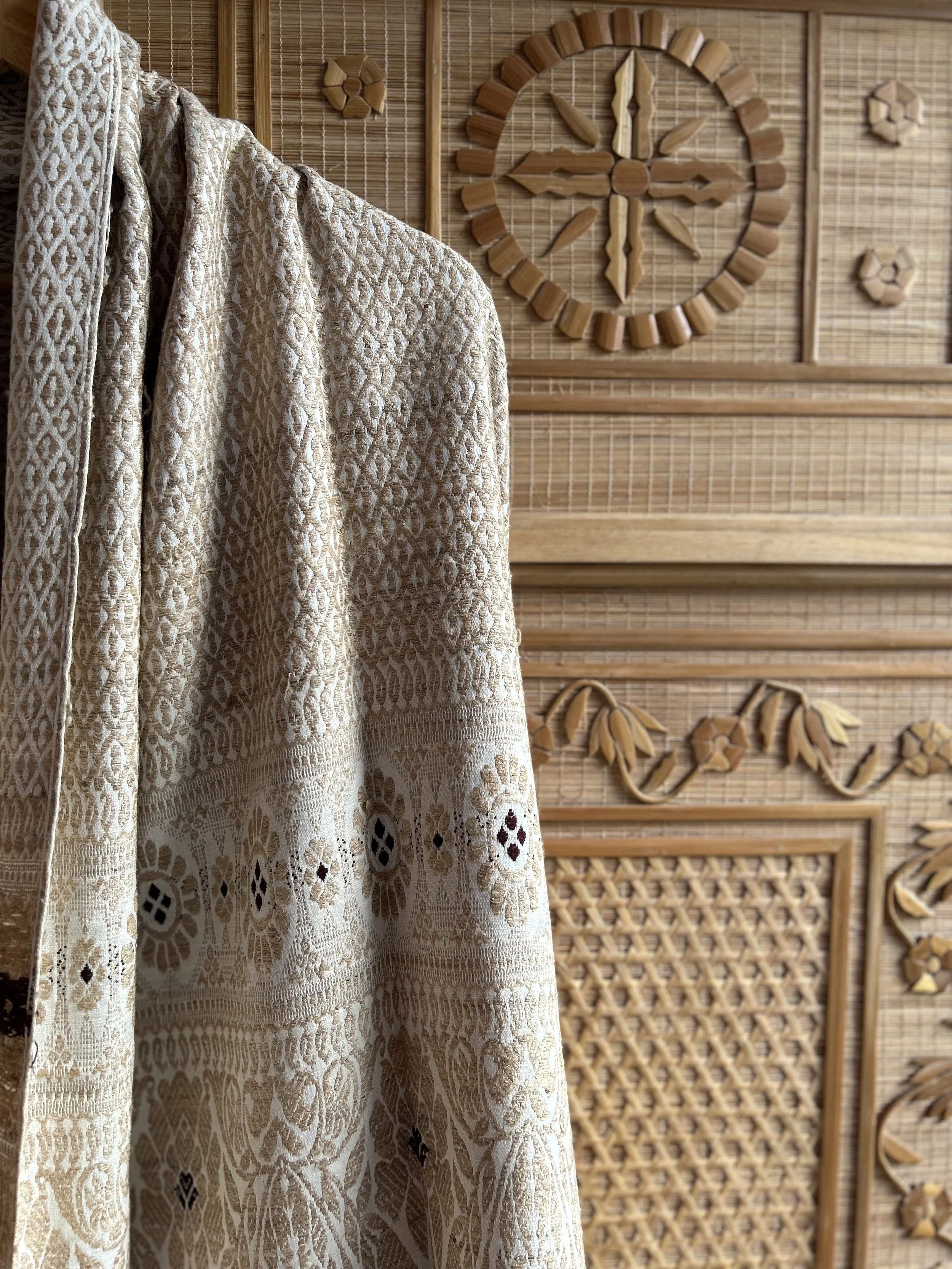
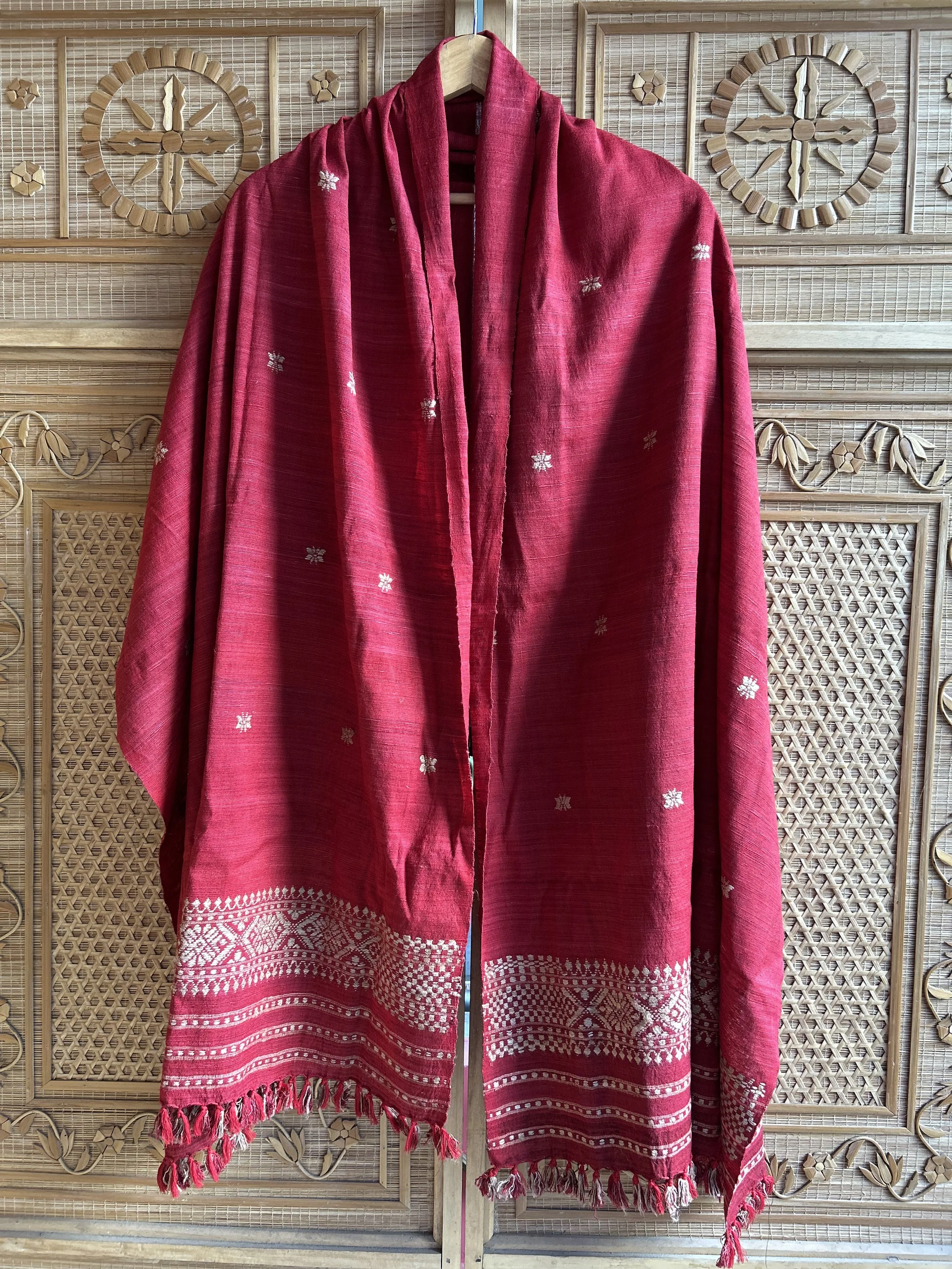
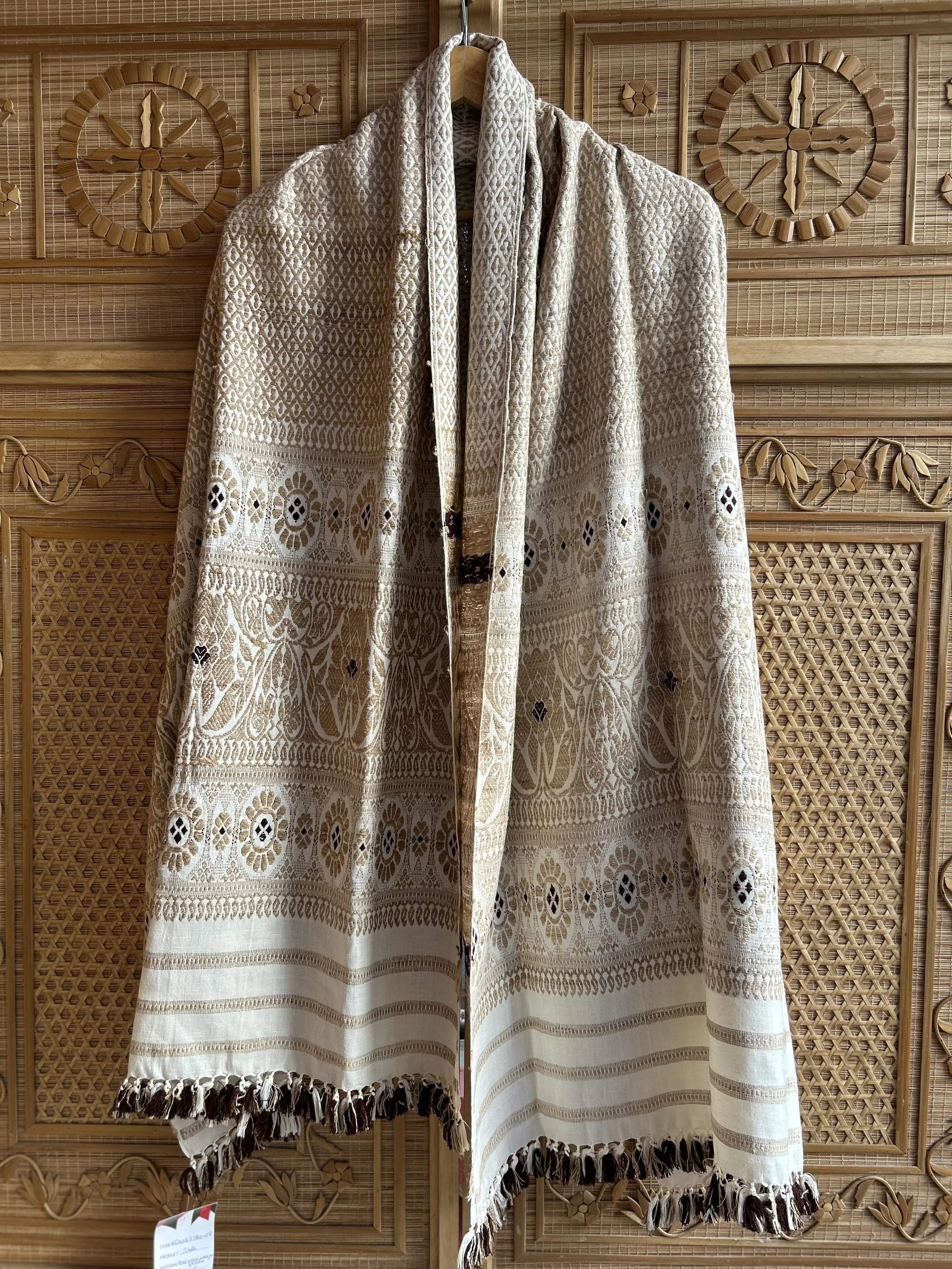
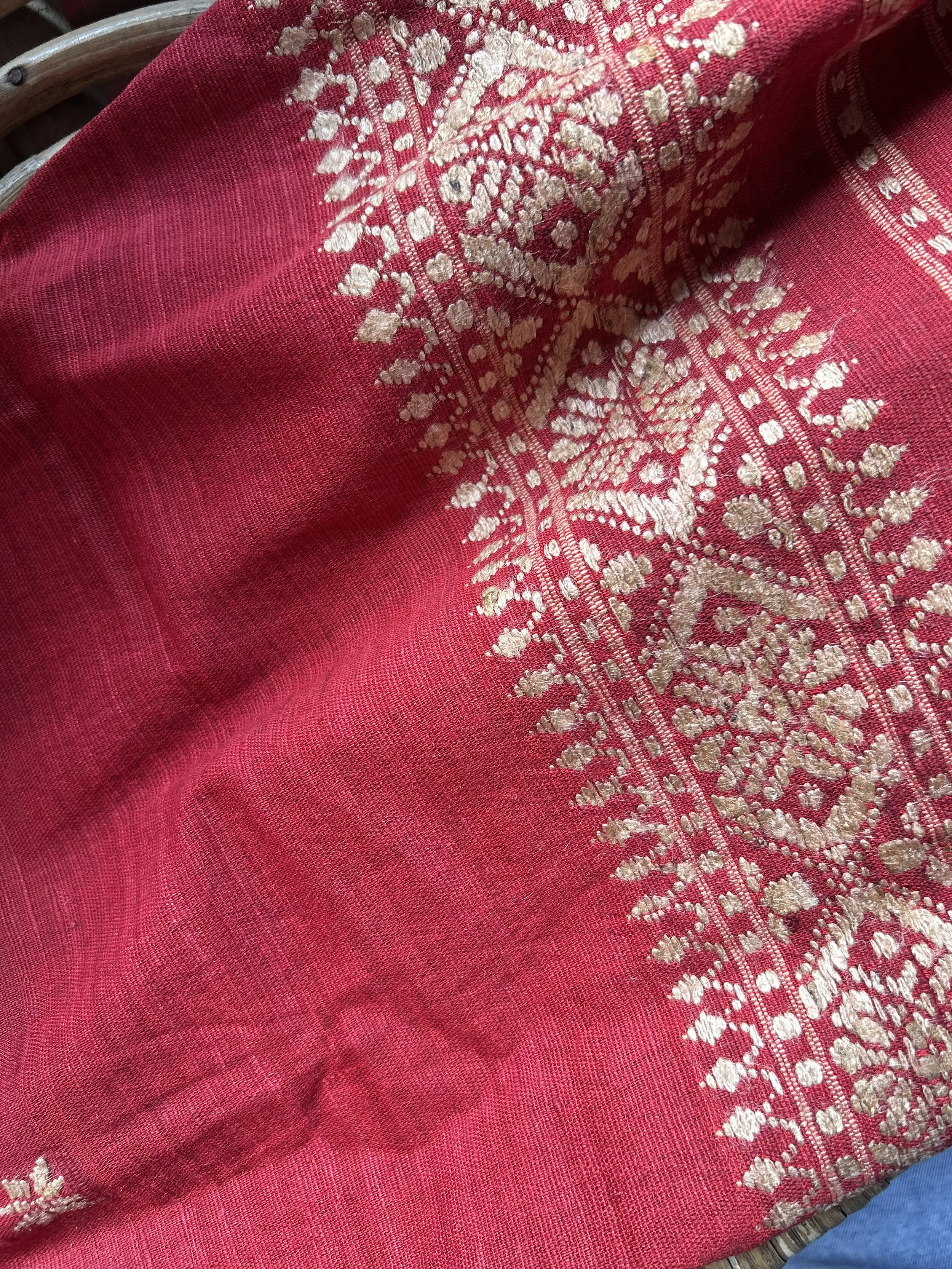
The textiles themselves reflect Assam’s cultural landscape, using traditional motifs and raw silk textures that emphasize restraint, durability, and material honesty. Eri silk, long undervalued locally, is reintroduced here as a fabric of dignity - ethically produced, biodegradable, and deeply tied to regional identity.