Cecilia Chamorro
Chile | Manila Fiber Basketry
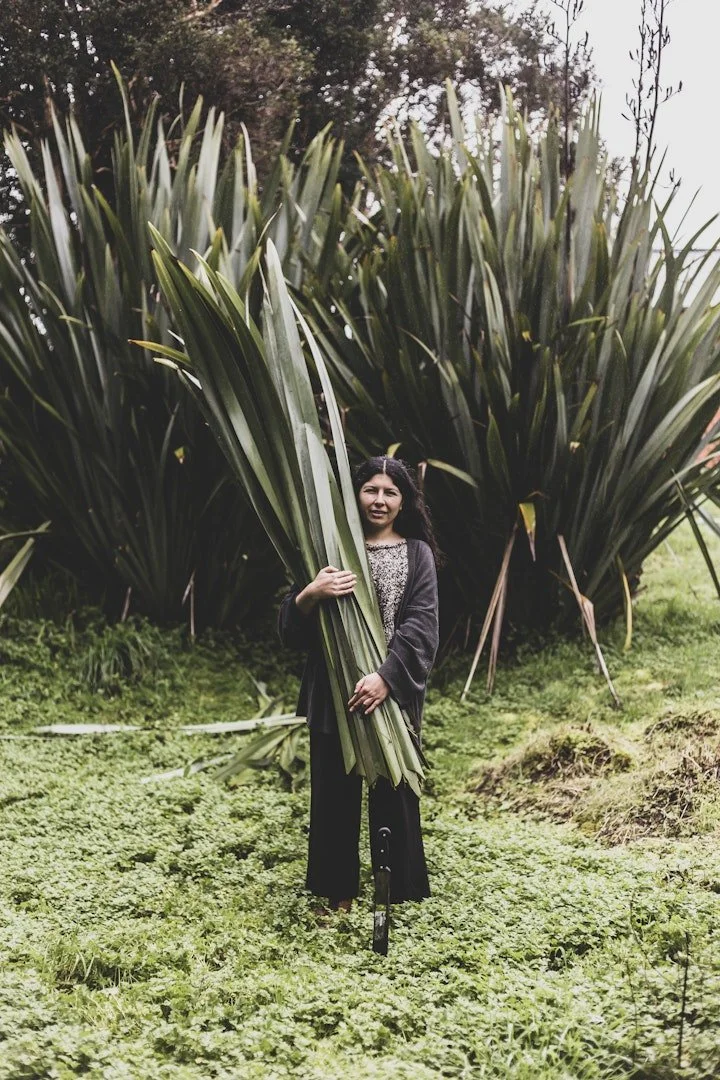
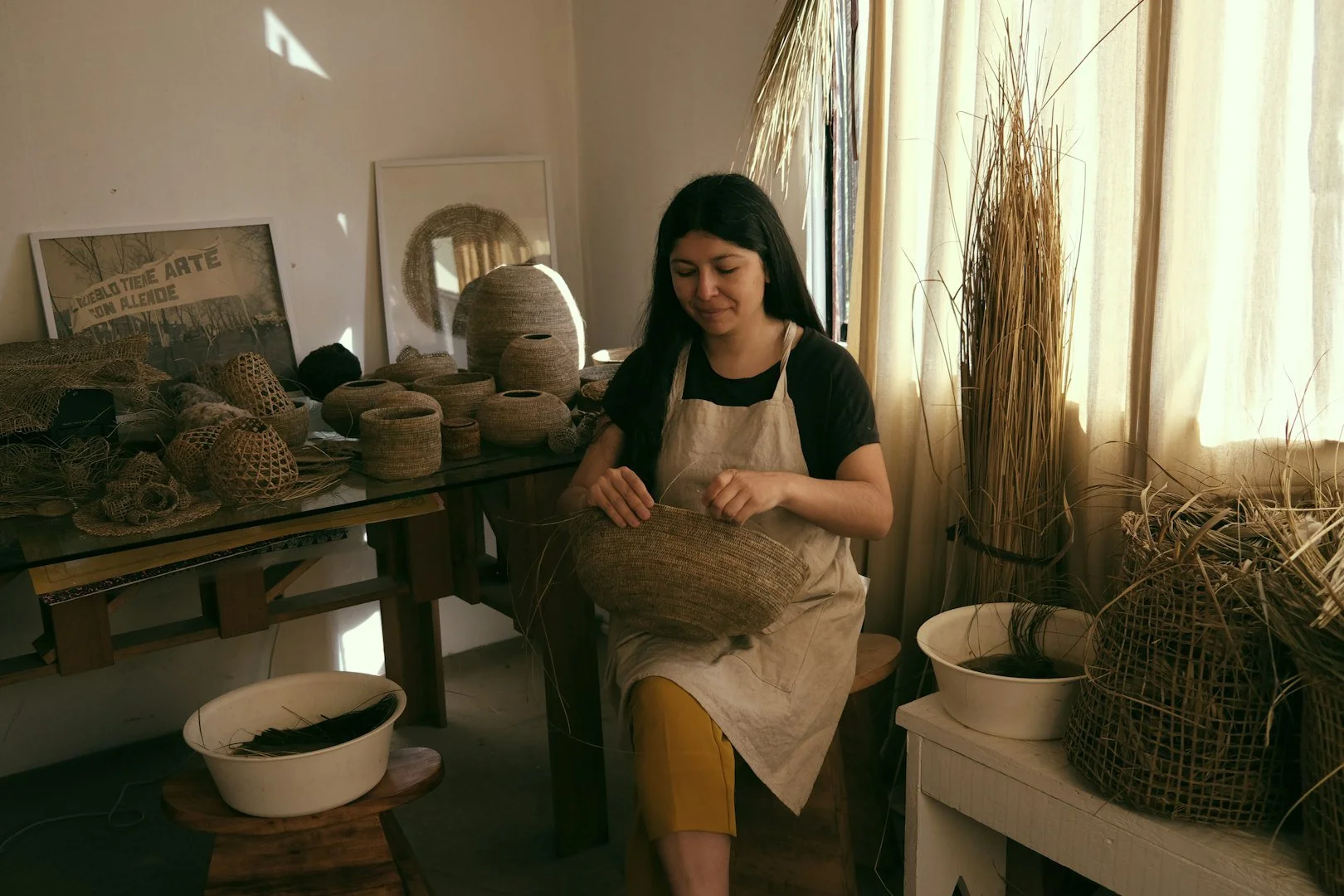
Cecilia Chamorro is an artisan and art educator from Puerto Montt, in the northern Patagonian region of southern Chile. Her basketry practice is closely tied to the landscapes where she grew up, shaped by the coast, forests, rain, and the everyday presence of baskets used for fishing, gathering, and food transport in local markets. According to Cecilia, “From a very young age, I grew up observing the basketry of my city. When going to the local market, all the shellfish and fish arriving from nearby islands by boat came in baskets made of manila.”
Today, Cecilia works with manila fiber, a plant material widely used in her region. She gathers the fiber herself each January, rotating plants and harvesting only the outer leaves so the plant can regenerate over several years. After cutting the leaves into fine strands, the fiber is dried for weeks, rehydrated before weaving, and worked entirely by hand.
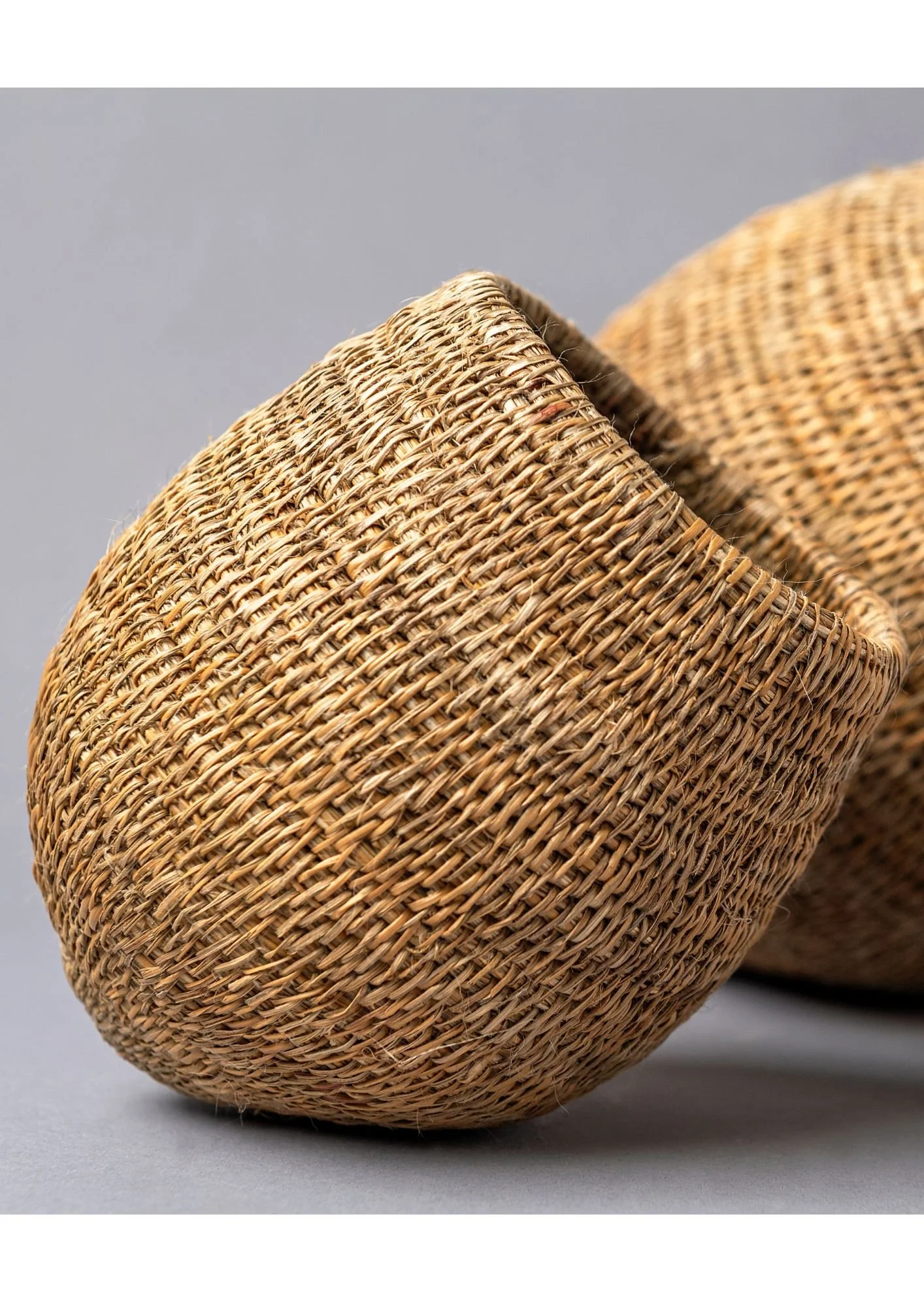
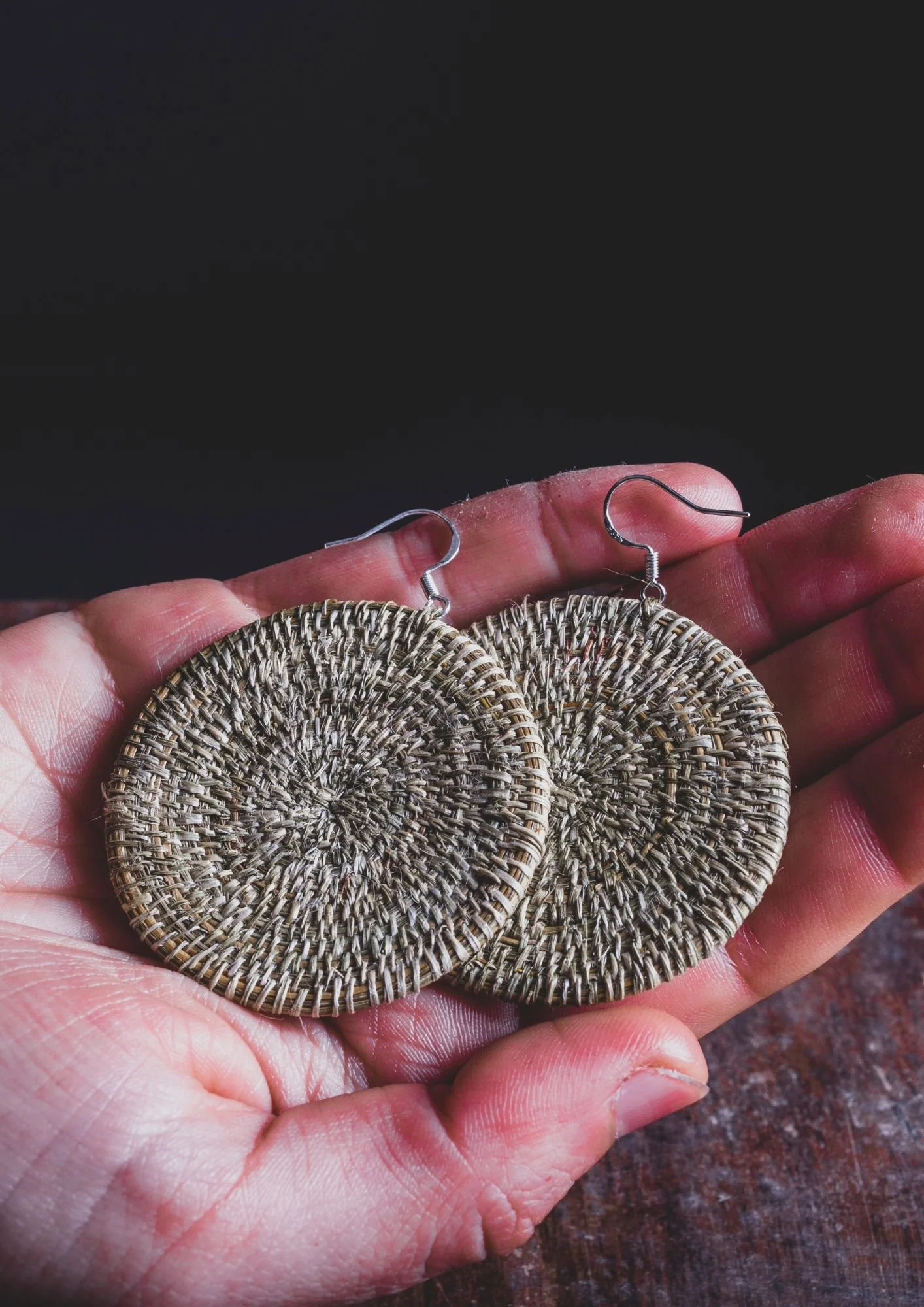
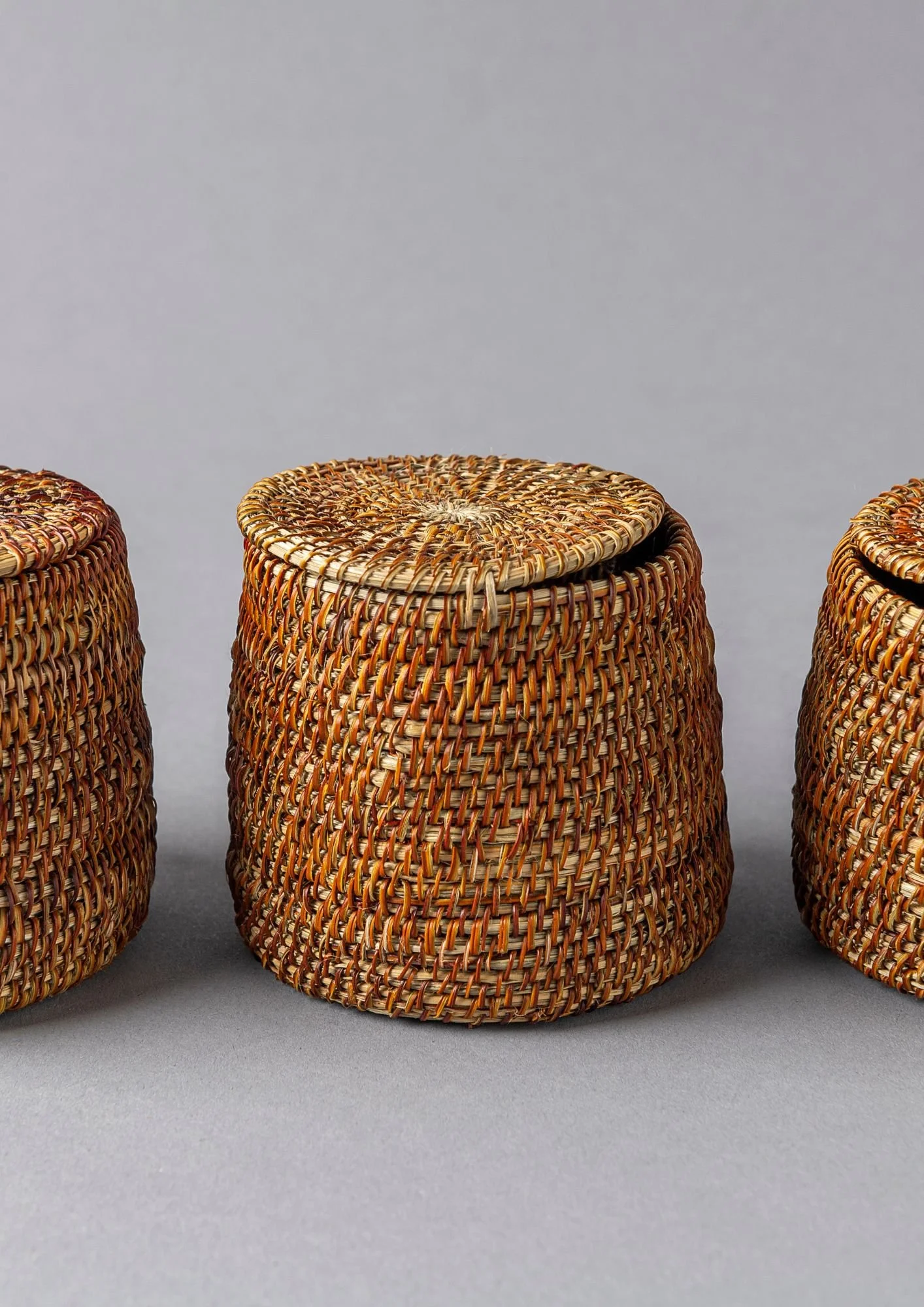
Her baskets are made using ancestral techniques practiced in the area, including aduja, llole, and coo weaves. While these techniques were traditionally used to make utilitarian containers, Cecilia reinterprets them into small, highly refined ornamental forms. One recurring openwork pattern, known as coo, is associated in local mythology with an owl figure. She works with unusually fine strands of fiber, producing dense, precise structures that require exceptional control and time. Some pieces incorporate the central rib of the leaf to create subtle shifts in color and texture, and a limited number are dyed black using purchased dye.
Cecilia works alone. Her mother assists only with fiber gathering and occasional dyeing, but all weaving is done by Cecilia herself. Her work is slow and limited in scale, with each piece made start to finish by hand in her home and studio.
Cecilia’s work has helped shift how basketry from her region is perceived, from a strictly utilitarian craft to one that can also exist as fine, sculptural work. She has received Chile’s Sello de Excelencia Artesanal award multiple times, recognizing both technical mastery and cultural significance.