

The Lake on Top of the World
by E. Mindling
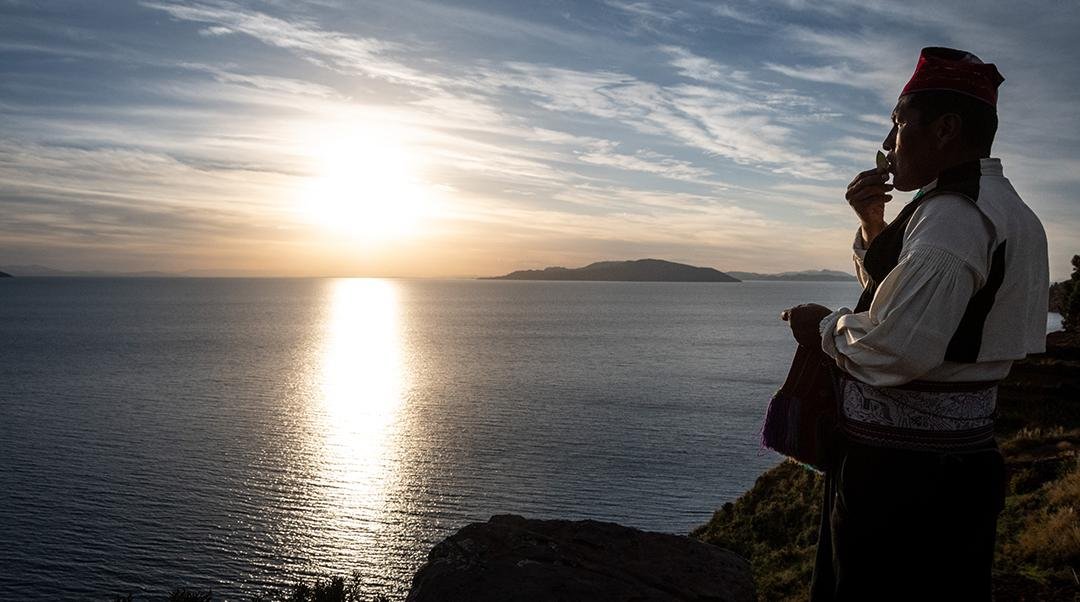
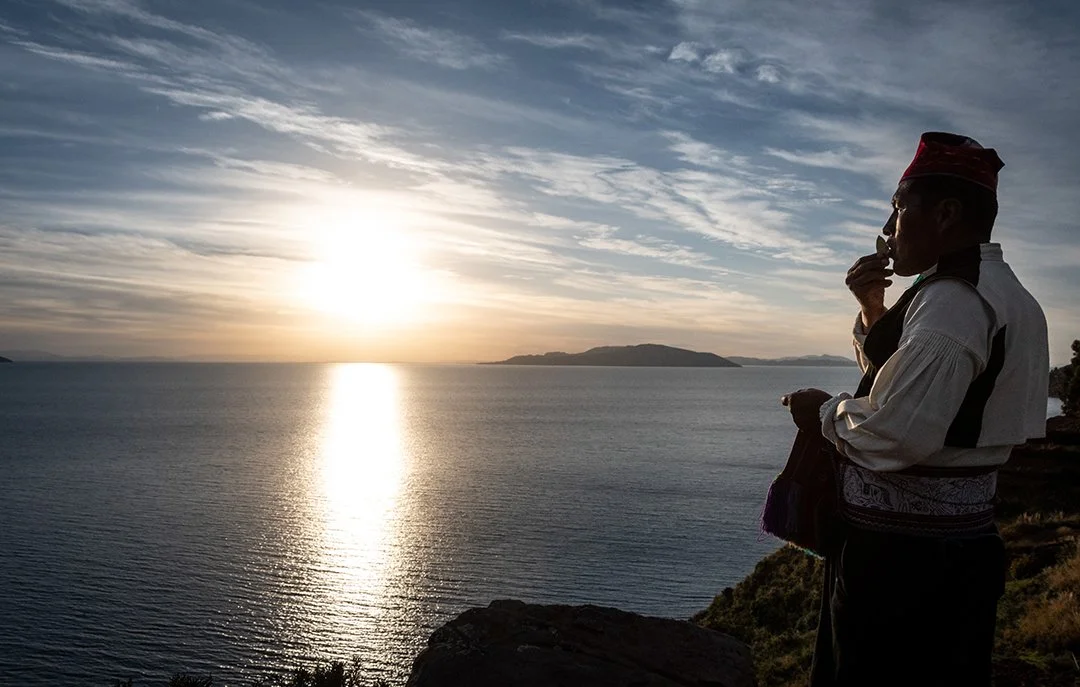
Juan Quispe speaks a blessing to the setting Sun. Taquile Island, Lake Titicaca, Peru.
From childhood, the legends of this water found their way to me. That was the old days of stories on paper, of National Geographic magazine arriving in the mail and opening my imagination to the world. Among the thousand portals into astounding places wrapped in those pages, there appeared Lake Titicaca. Its name refers to a Stone Puma, and it is the highest navigable lake on earth, touching the belly of the sky at 12,500 feet. Here, the ancient ones say that humanity was born. From the living room rug, where I lay and thumbed through those pages, this place of legends on top of the Peruvian Andes seemed lifetimes away, only a dream.
Then I grew up, found my wings, and realized that this faraway lake on top of the world wasn’t actually lifetimes away. One June morning under a bright sun in the middle of the southern winter, I wound through the raucous streets of Puno to the docks. There I stepped onto a light blue boat with a collection of other dreamers, and we zipped out over the dark blue-green waters of Titicaca and into the depths of time.
The lake is massive, its edges dotted with villages of stone and adobe. There are terraced fields in every direction where potatoes and quinoa are grown. People have lived here, well, forever, it would seem. Some people, the Uros, actually live on the lake itself, on floating islands and in houses made of totora reeds.
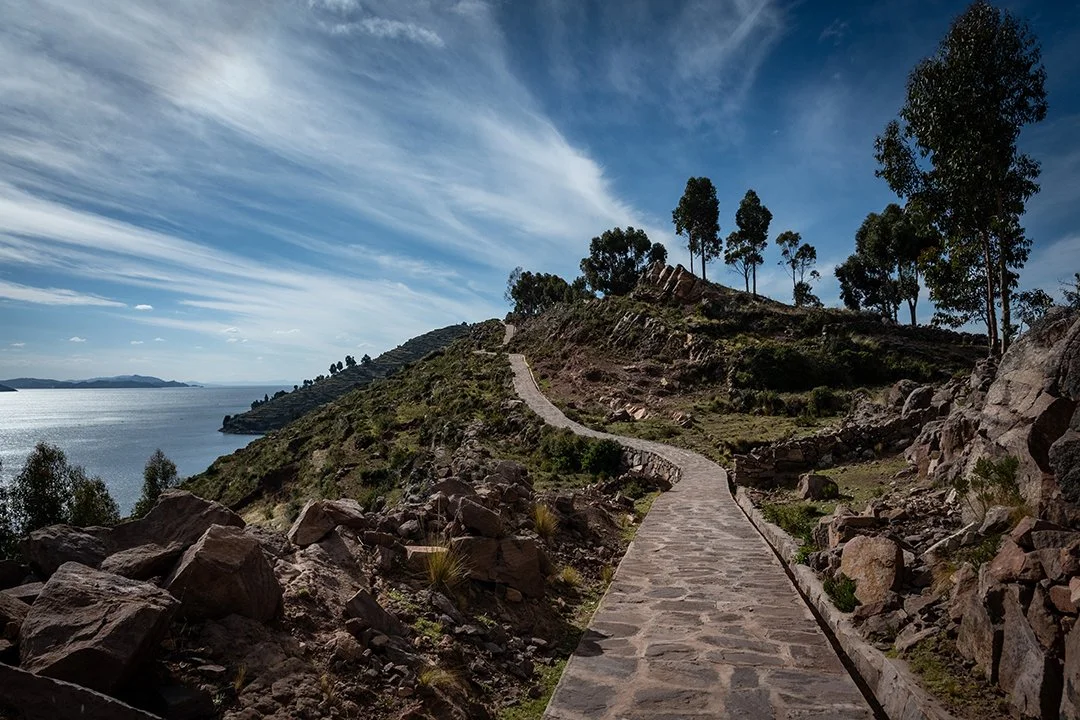
But our destination that day, aside from the pure joy of being upon those massive waters, was another island, the traditional kind made of earth and stone. Its name was Taquile—a small island in the middle of the lake. No cars. Cobblestone trails instead of roads. No electricity, just solar panels for basic lighting. And, by communal agreement, no dogs. What they value more here is the quiet, the calm, the lake wind, and threads.
The Quechua-speaking Taquileños are renowned for their textile arts, and UNESCO has designated their cultural work a “Masterpiece of the Oral and Intangible Heritage of Humanity.”
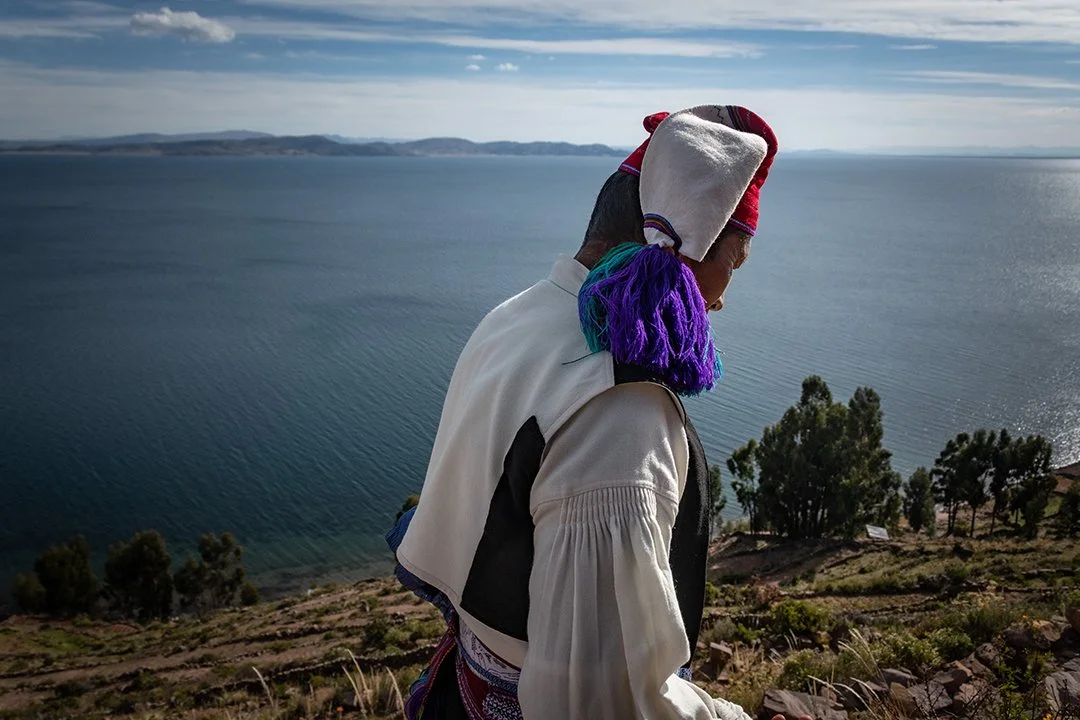
The men of Taquile knit extremely fine hats that are a language unto themselves. The finest are made by marriage-age young men, who begin their apprenticeship around age six. A well-knit hat speaks of discipline, skill, commitment, and work ethic. It speaks of a young man worth marrying.
Women spin and weave belts, which are wearable records of time, work, ritual, memory, and social belonging, especially the agricultural and ceremonial cycle of island life. They are like woven books of the way things are, wrapped around the core.
Long before sunset, the last tourism boats left. But I stayed. I spent the night on Taquile in a guest room at Juan Quispe’s house. We spoke by candlelight of knitting, coca leaf blessings, and tourism.
“Things have obviously changed here since tourists started coming to visit,” Juan said. “And overall, it is quite positive. It is now our main source of income, and our lives are easier because of it. We are a collective society here, and long ago we made communal agreements on pricing, keeping middlemen out, and rotating sales opportunities among families.”
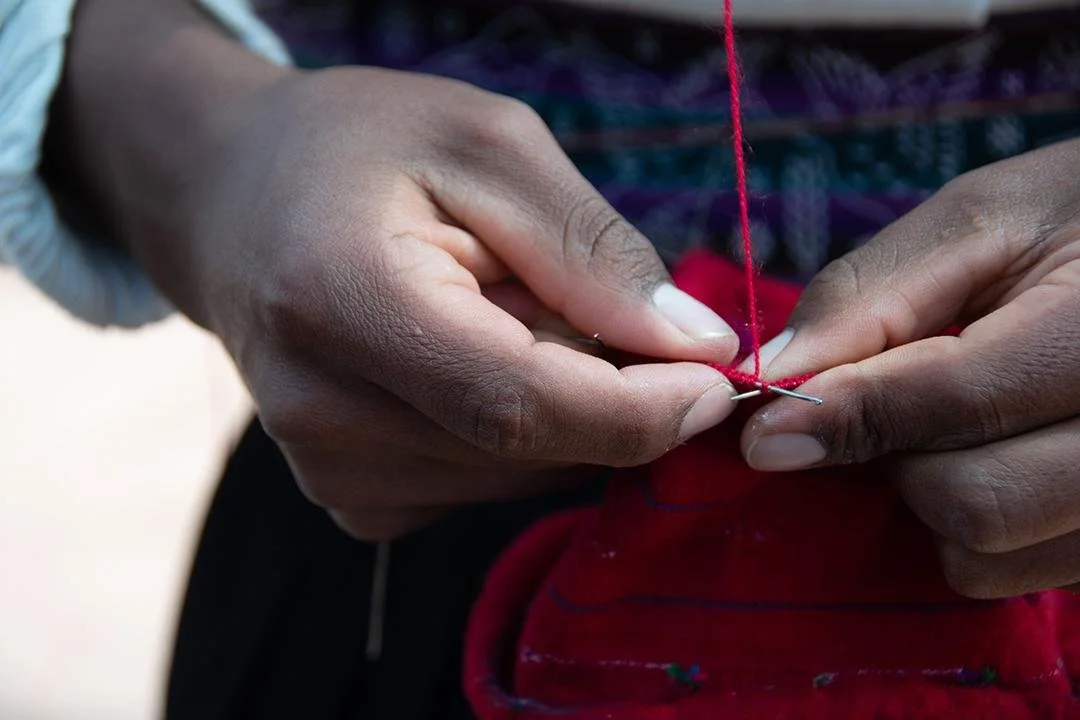
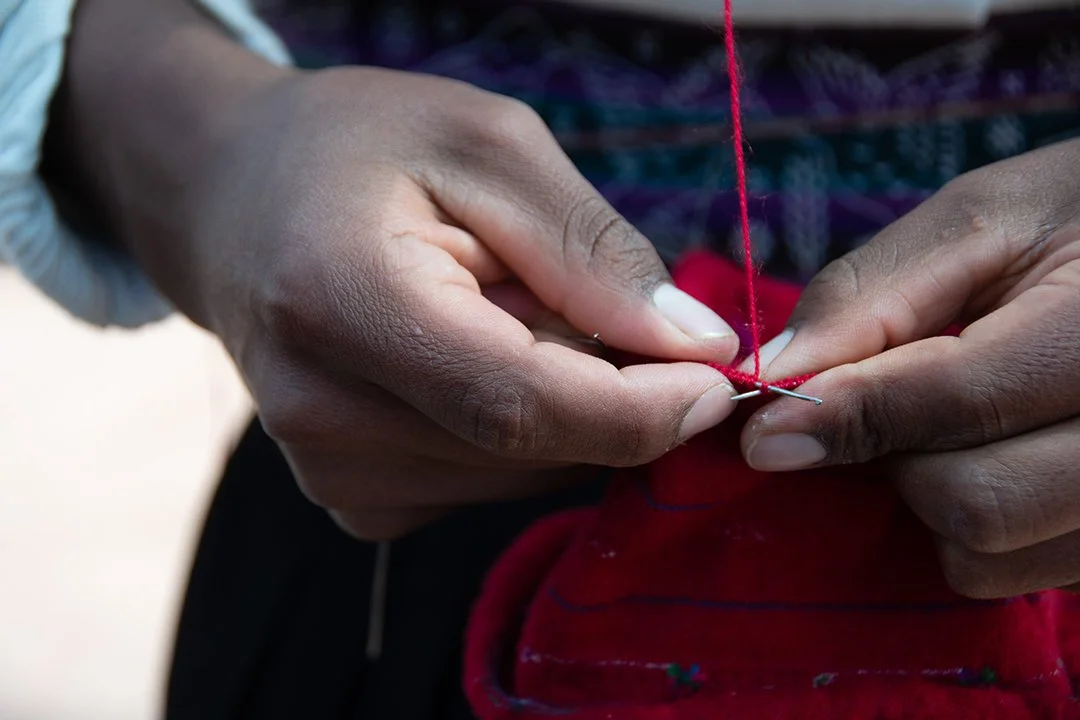
Juan knit as we spoke, his fingers so knowledgeable that he didn’t need the dim light of the candle to see what he was doing.
“It’s maybe unexpected,” he continued, “but the interest in our ways from the outside, these visitors who come to see us, has reinforced our own care for how we do things. Beyond the island, many things are being lost. But here we have worked together to keep our dress strong, keep our traditional governing system solid, and,” nodding toward his working hands, “keep our skills sharp.”
Then, with a laugh, he said, “We don’t want to become muruqu maki!”
“What’s that?” I asked.
“Muruqu maki… round hands. Taquileños who have no skill for knitting or weaving. They are kind of useless!”
Sitting there in my ball cap, I couldn’t help but glance down at my hands. Juan laughed.
“Don’t worry, these are island rules. You get a pass. But, if you wanted to marry someone here…”
Later, lying under heavy blankets in the brisk silence of Taquile, I thought about that boy on the living room rug, staring into the pages of a magazine at a lake impossibly far away. He had imagined distance as the great mystery. But here, on the island in the sky, I understood that the deeper mystery was not how far I had traveled to reach this place, but how patiently people here had stayed — stitch by stitch, season by season, keeping a world intact with their sharp hands. Outside, Lake Titicaca, ancient and enormous, breathed in the dark, holding the stars on its back.
Photography courtesy of Eric Mindling
