Lisima Handmade
Angola | Root & Wood Basketry
Lisima Handmade is a collective of artisans from Alto Cuito and surrounding villages in Moxico Province, a remote region of miombo forest and grasslands in eastern Angola. The area is part of the Angolan Highlands Water Tower, where rivers begin their journey toward the Okavango Delta. Lisima means “center of the world,” a name reflecting both place and responsibility.
The collective formally came together in 2023, led largely by elders who were among the last to practice traditional craft skills. For generations, baskets, wooden household tools, and hand-forged metal objects were part of daily life, used for storing cassava and grain, winnowing, carrying water, and maintaining homes. Over time, plastic and factory-made goods began to replace these handmade forms, and many skills were on the verge of being lost.
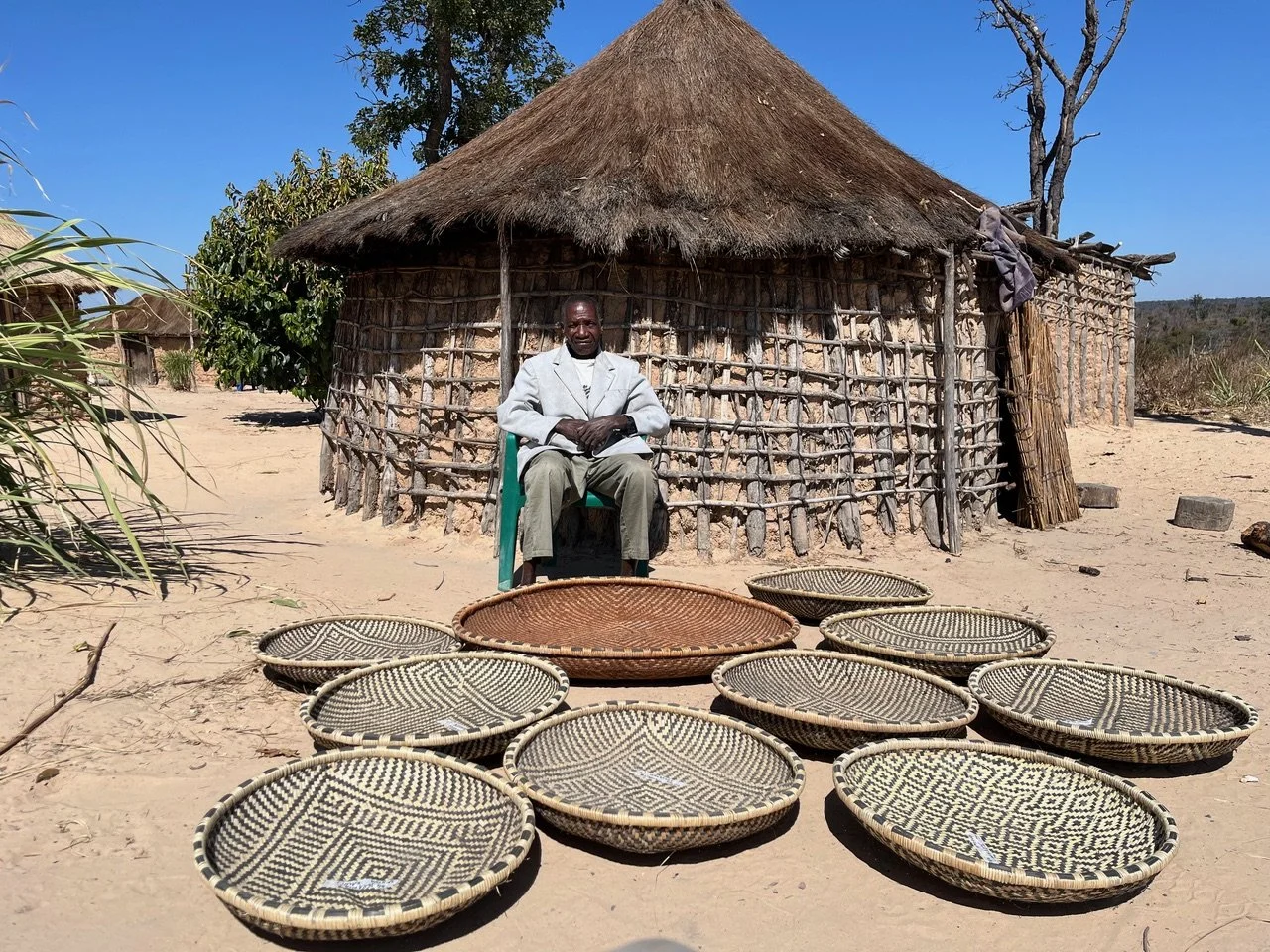
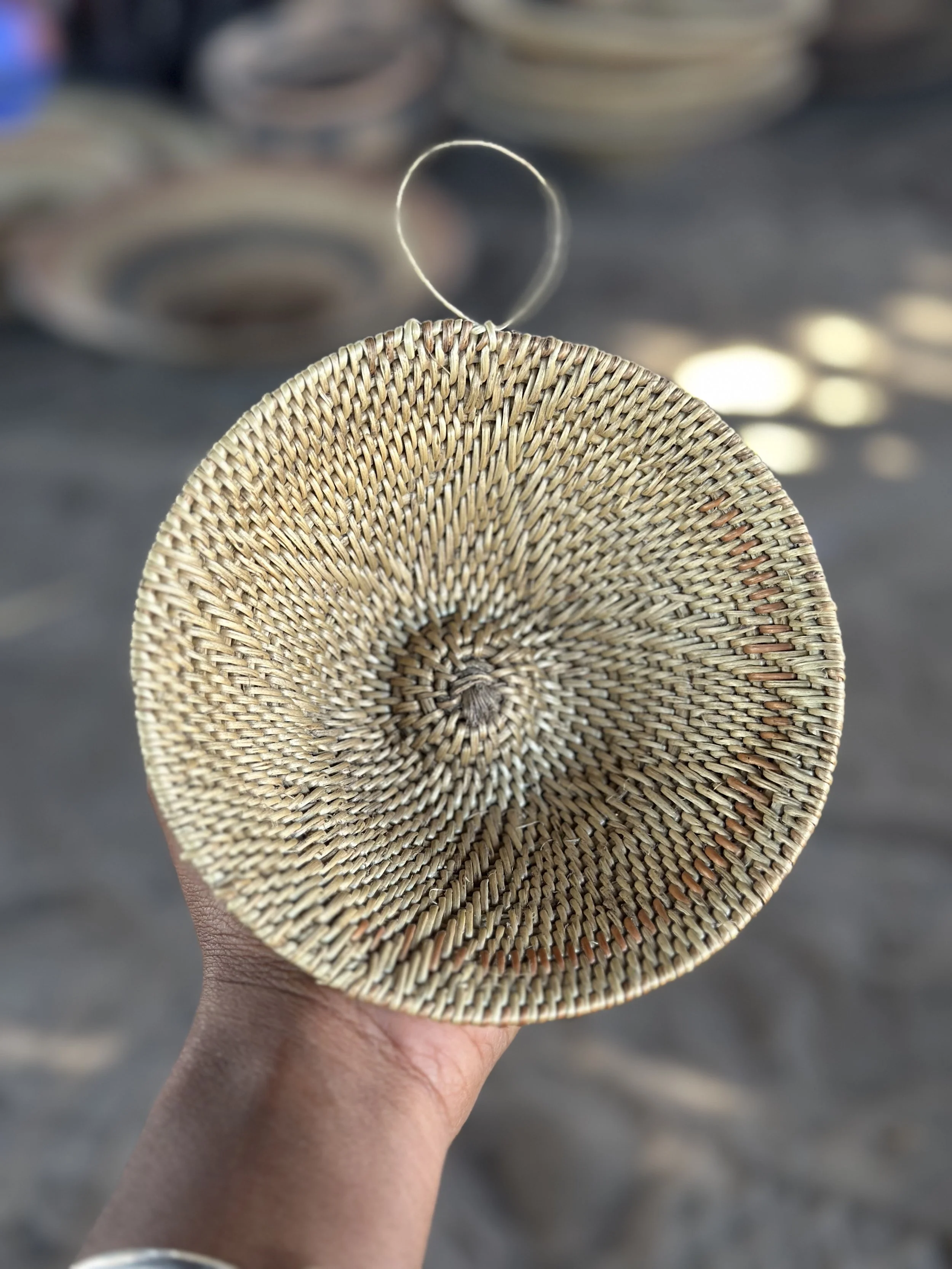
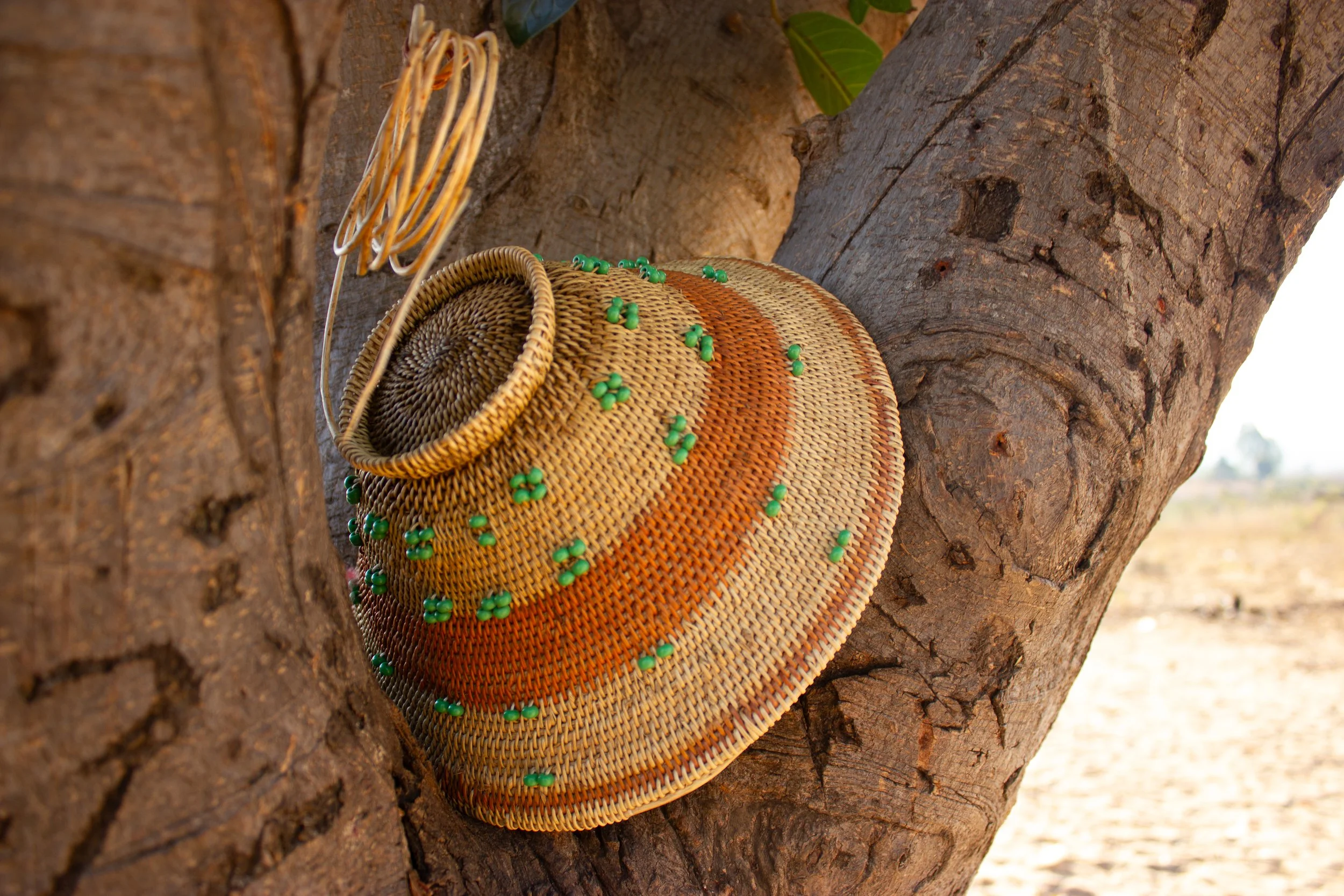
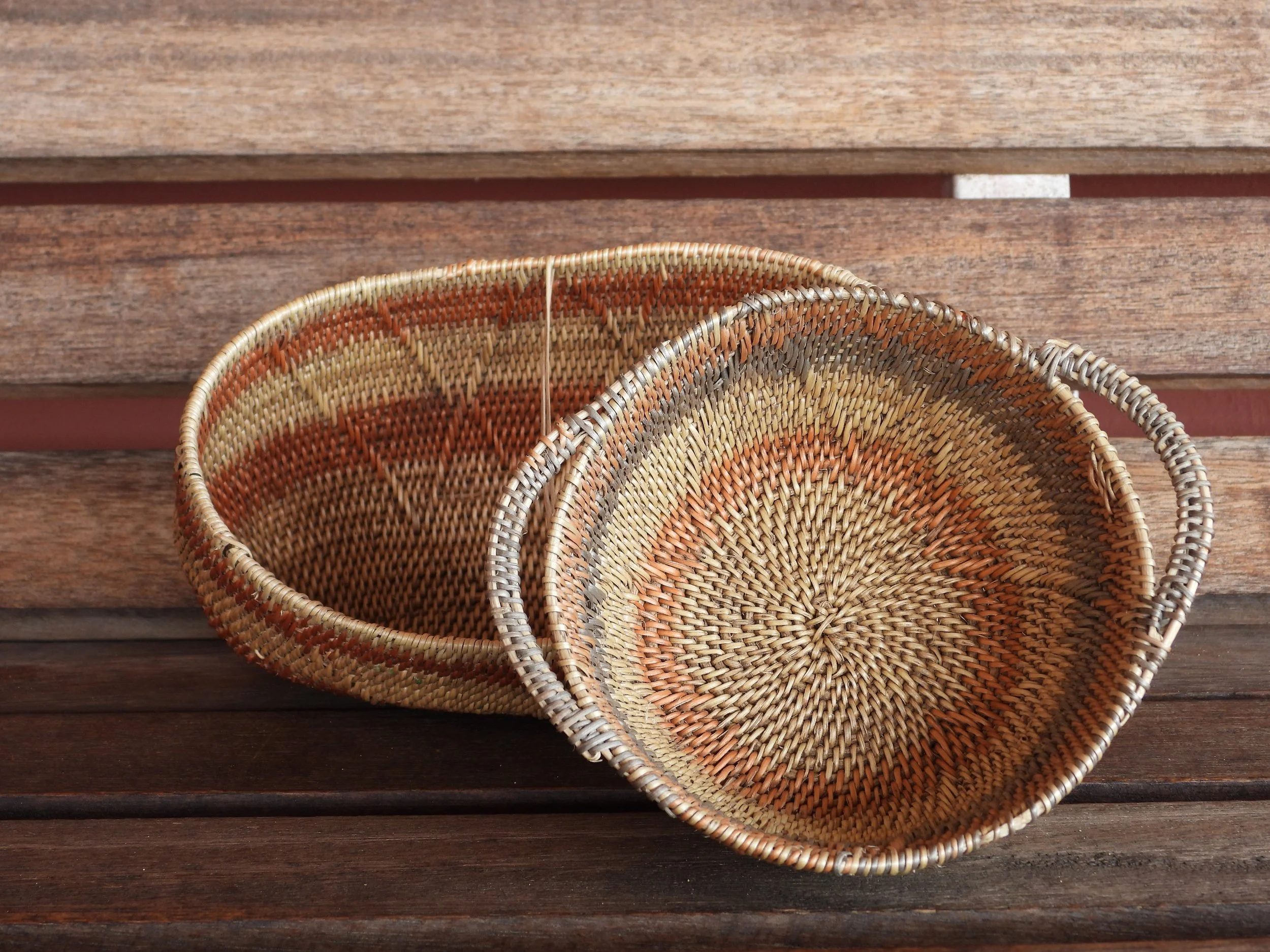
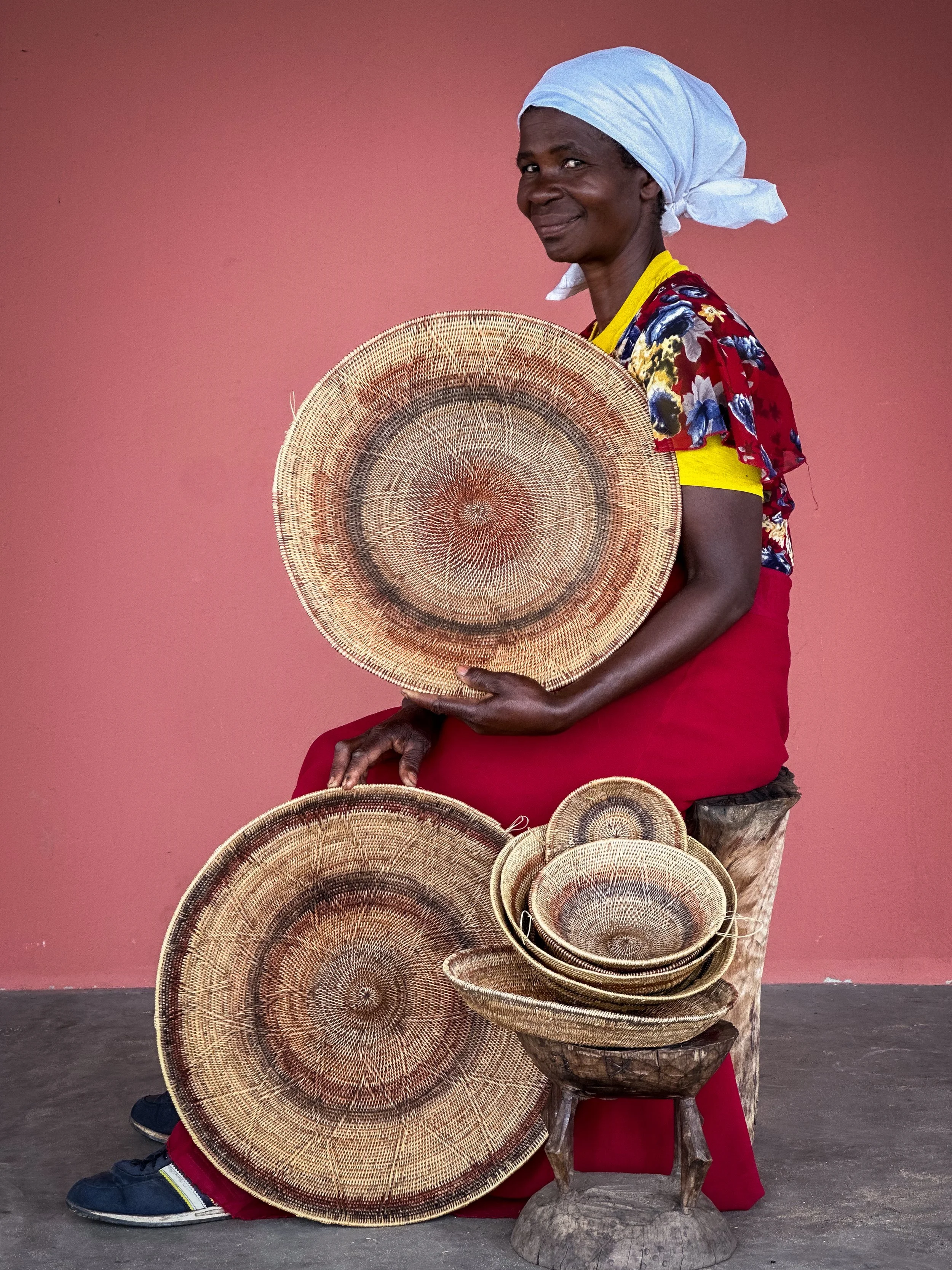
Lisima Handmade works primarily with chihele, finely coiled baskets made only by women using the roots of the mukenge tree, and lisehua, flat woven baskets made only by men from thin strips of mukolongonjo wood, bound with mukenge root. These materials are gathered locally and prepared by hand. Roots are carefully harvested so trees can regenerate, and dyes are made from other plants or from mud found in the landscape. A single basket can take many weeks to complete, often woven at the end of long days spent farming.
Today, the collective includes more than 300 artisans, the majority of whom are women, who balance farming, family care, and craft. Many of the women learned to weave from their mothers, just as their mothers learned from theirs. After the war, much of that knowledge was close to being lost, which is why teaching young girls to sit and weave alongside them now matters so much. Weaving is not only a source of income but also a way for communities scattered by decades of war to come together again. When artisans gather to work, they teach younger generations, share knowledge, and rebuild social bonds.
Each piece is signed with the maker's name and their village. Although Lisima Handmade is still new, the baskets have already drawn attention for their exceptional quality and material knowledge. For the artisans, the work offers both practical support and pride.