Siju Chamanla Premji
India | Bhujodi Weaving
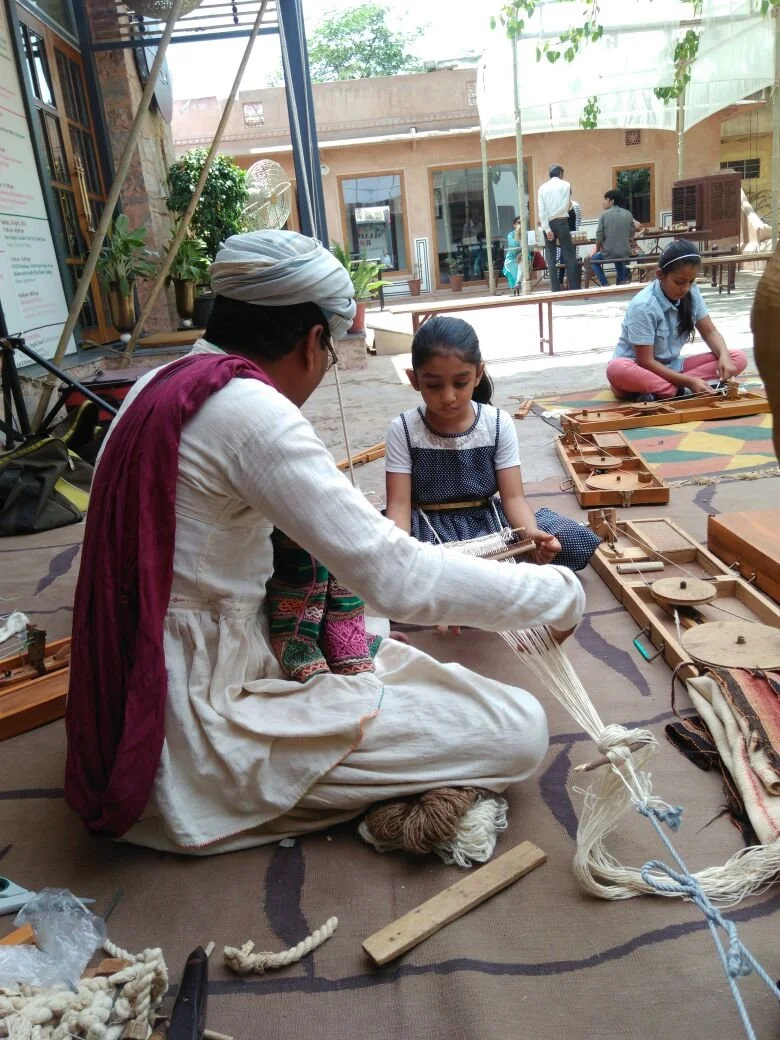
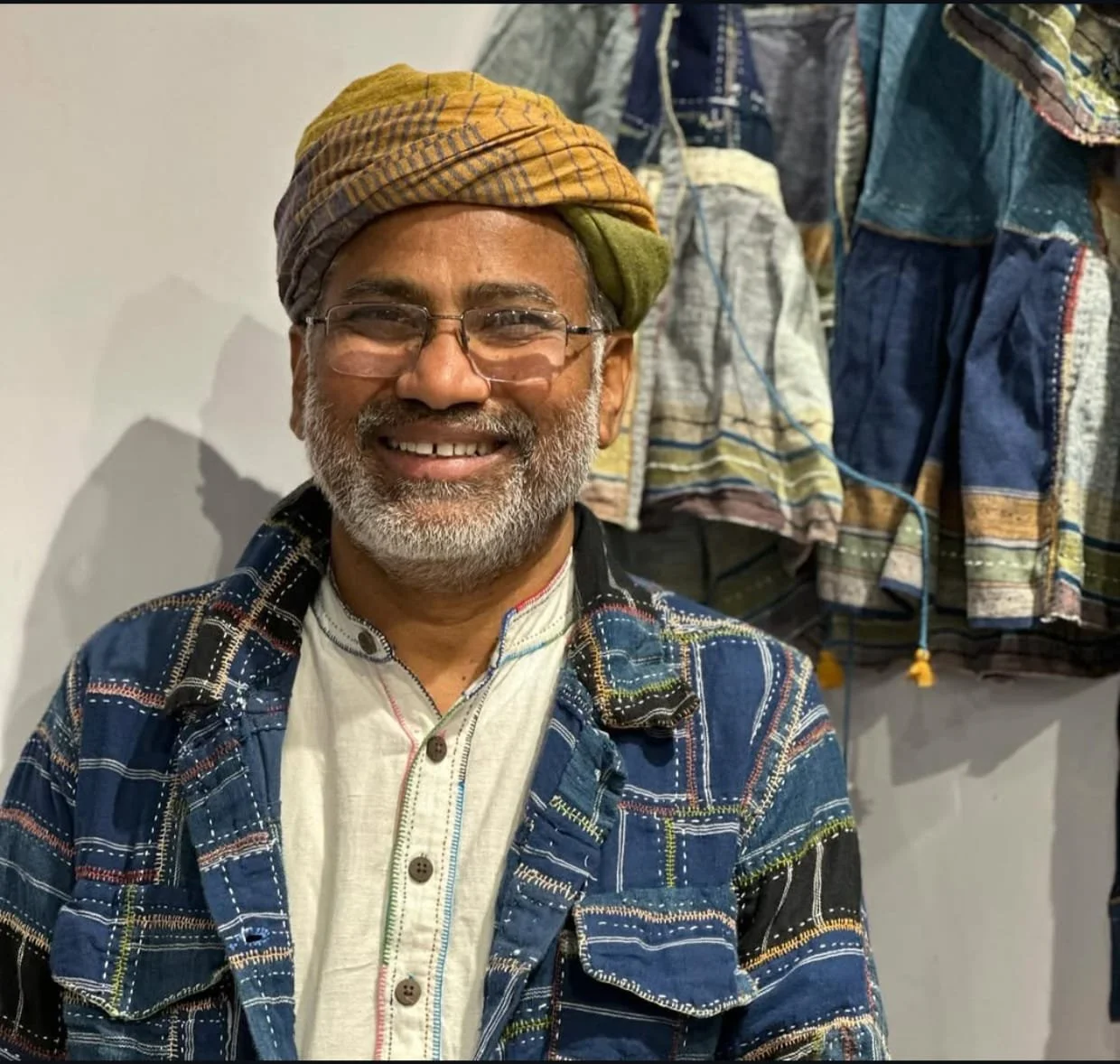
Siju Chaman Premji is a traditional handloom weaver and designer from the Kutch region of Gujarat, India. Weaving in his family is not a recent revival or side practice; it has been the family’s work and identity for eleven generations, shaping how knowledge, skill, and responsibility are passed down.
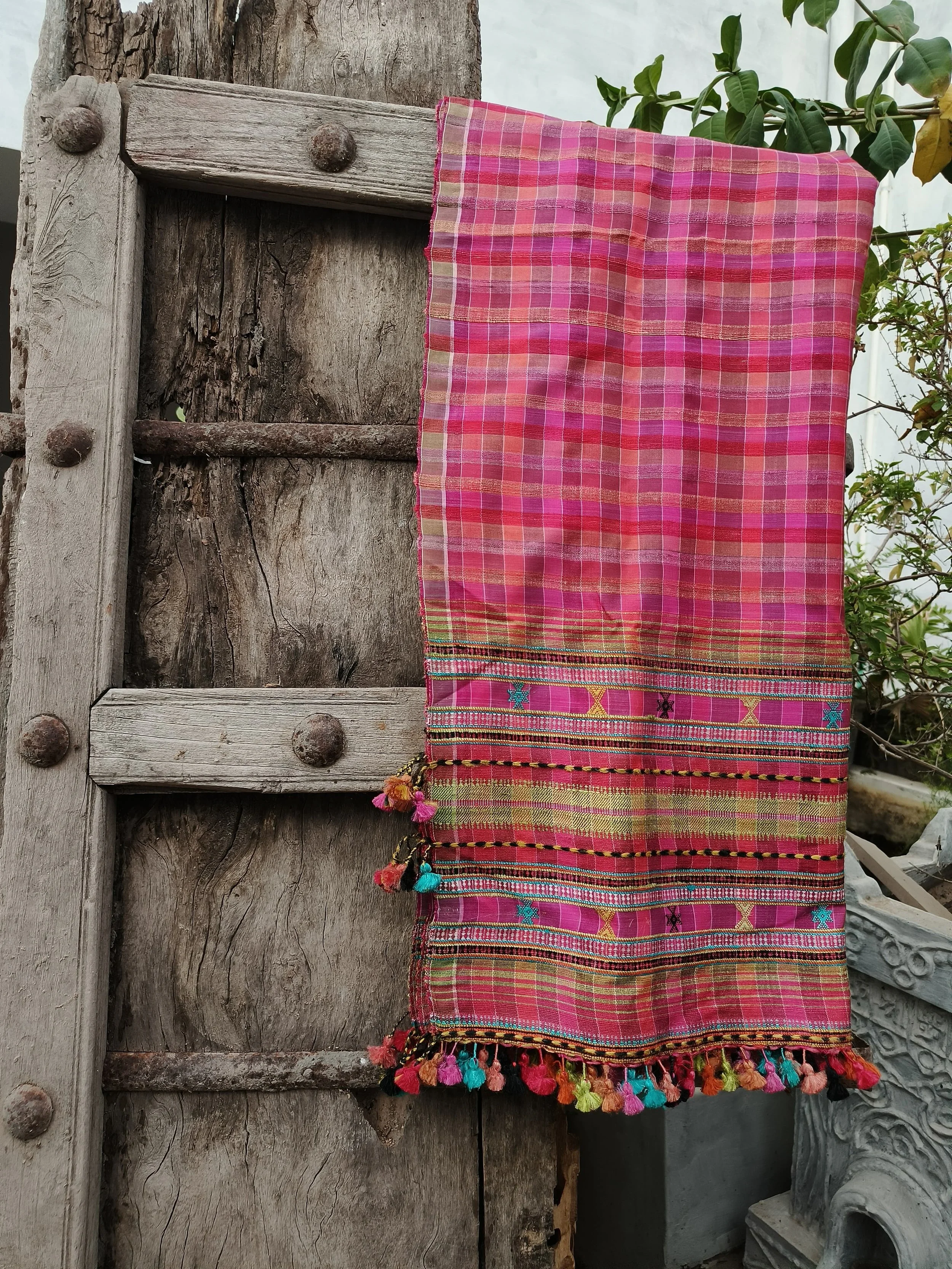
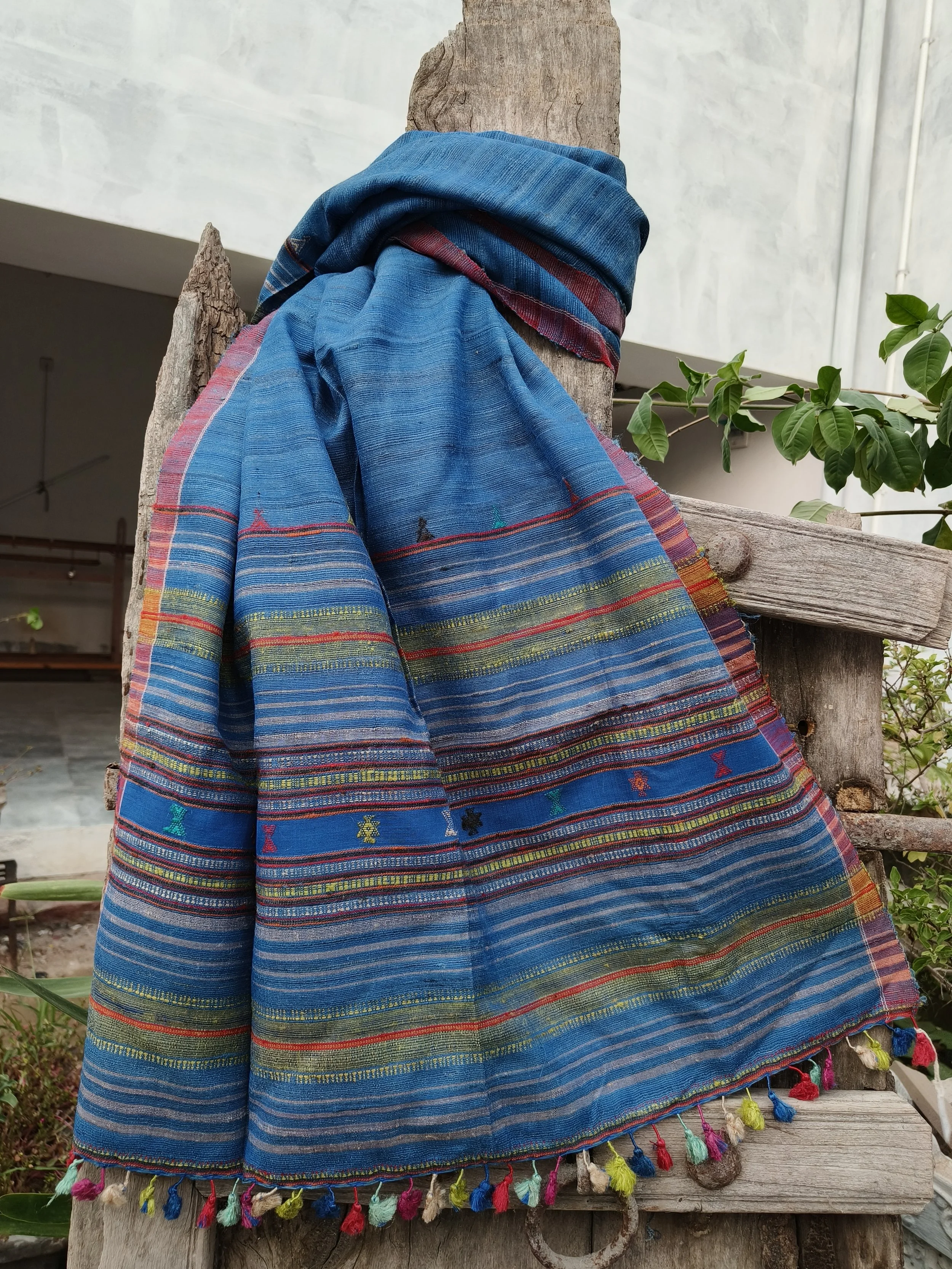
The textiles are woven on handlooms using extra weft techniques, where patterns are built directly into the fabric rather than added later. This requires careful planning before the loom is even set up and a steady hand throughout the process. The work moves at the pace the loom demands, not the market. The process itself is low-impact by design; weaving is done entirely by hand, without electricity, cotton and wool are sourced within India, and natural dyes are used wherever possible. Leftover materials are reused to remain sustainable.
Motifs play a central role in Bhujodi Weaving’s designs. Chomukh, the four-eyed motif, is traditionally placed at the center of a textile and is associated with protection and balance. Vakhiyo, formed from chevron shapes, reflects movement and resilience. Satkani, seven parallel lines, refers to elemental energies and the weaver’s relationship with nature. These patterns are part of a visual language that has been carried within the Vankar weaving community for generations.
Siju’s approach began to shift during his design studies at Kala Raksha Vidyalaya, where he learned to hold the tradition's structure while allowing room for change. That balance shows up most clearly in his garments, many of which are hand-stitched from handwoven cloth. This work draws inspiration from Muripando, a wedding tradition in which weaving and stitching are shared acts between partners, bringing an older practice of collaboration into contemporary form.
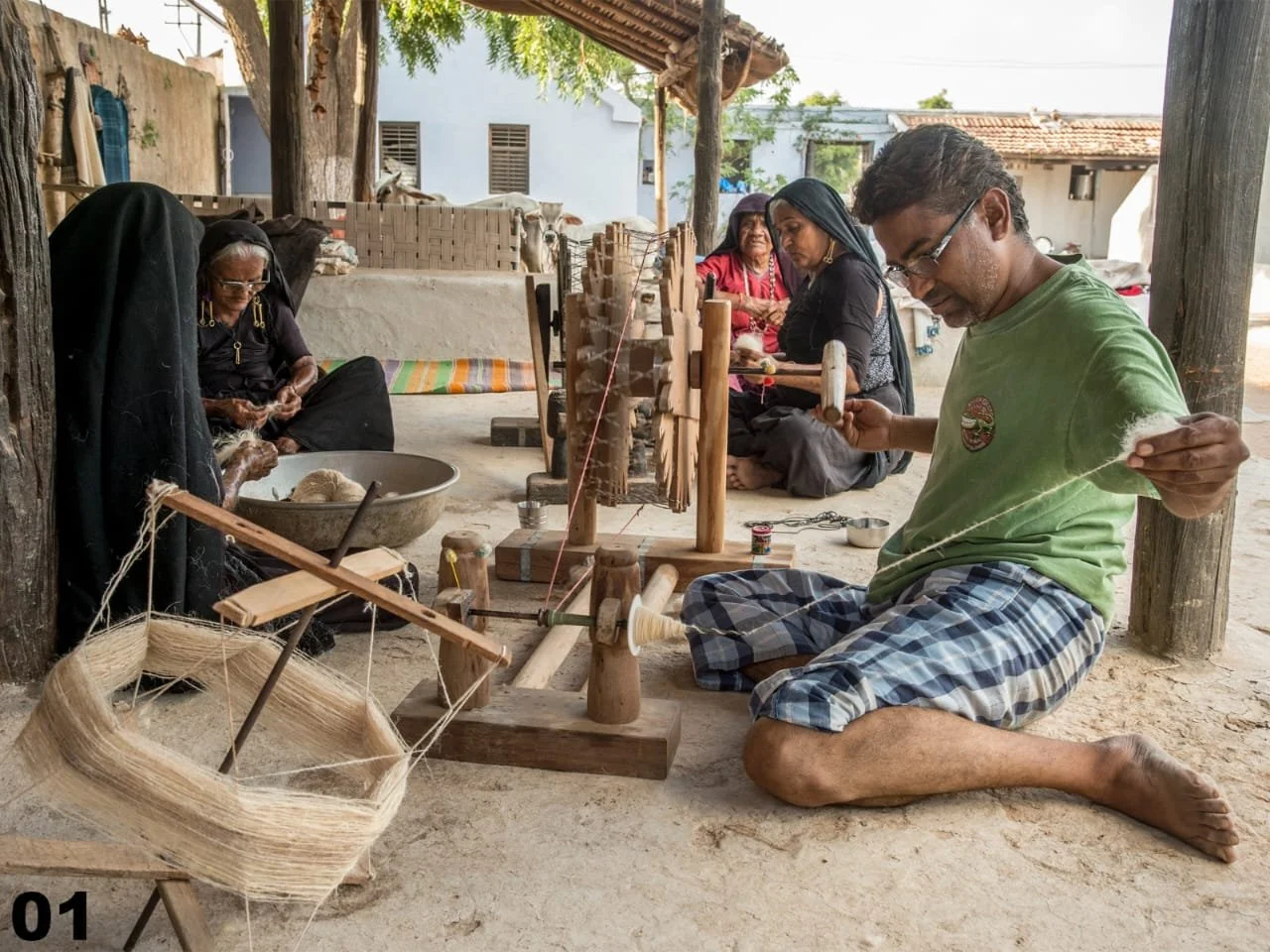
As a designer, Siju works with a group of 100 artisans from his extended family and community, evenly split between women and men. Men are primarily involved in loom work, warp preparation, dyeing, and weaving. Women do yarn preparation, natural dying, finishing, and hand stitching, creating paid work that can be done close to home.
Artisans are paid promptly and transparently, with rates reflecting skill and time rather than minimum thresholds. Income from the work supports households, education, and health needs, and helps keep younger generations engaged in the craft.