Coopérative Timnay

Weaving Freedom and the Legacy of Berber Carpets
Coopérative Timnay is a women-led weaving cooperative based in the Sirwa region of central Morocco, near Taznakht in Ouarzazate Province. The cooperative is rooted in Amazigh culture, where carpet weaving has long been part of daily life, carried through families as both practical knowledge and cultural expression.
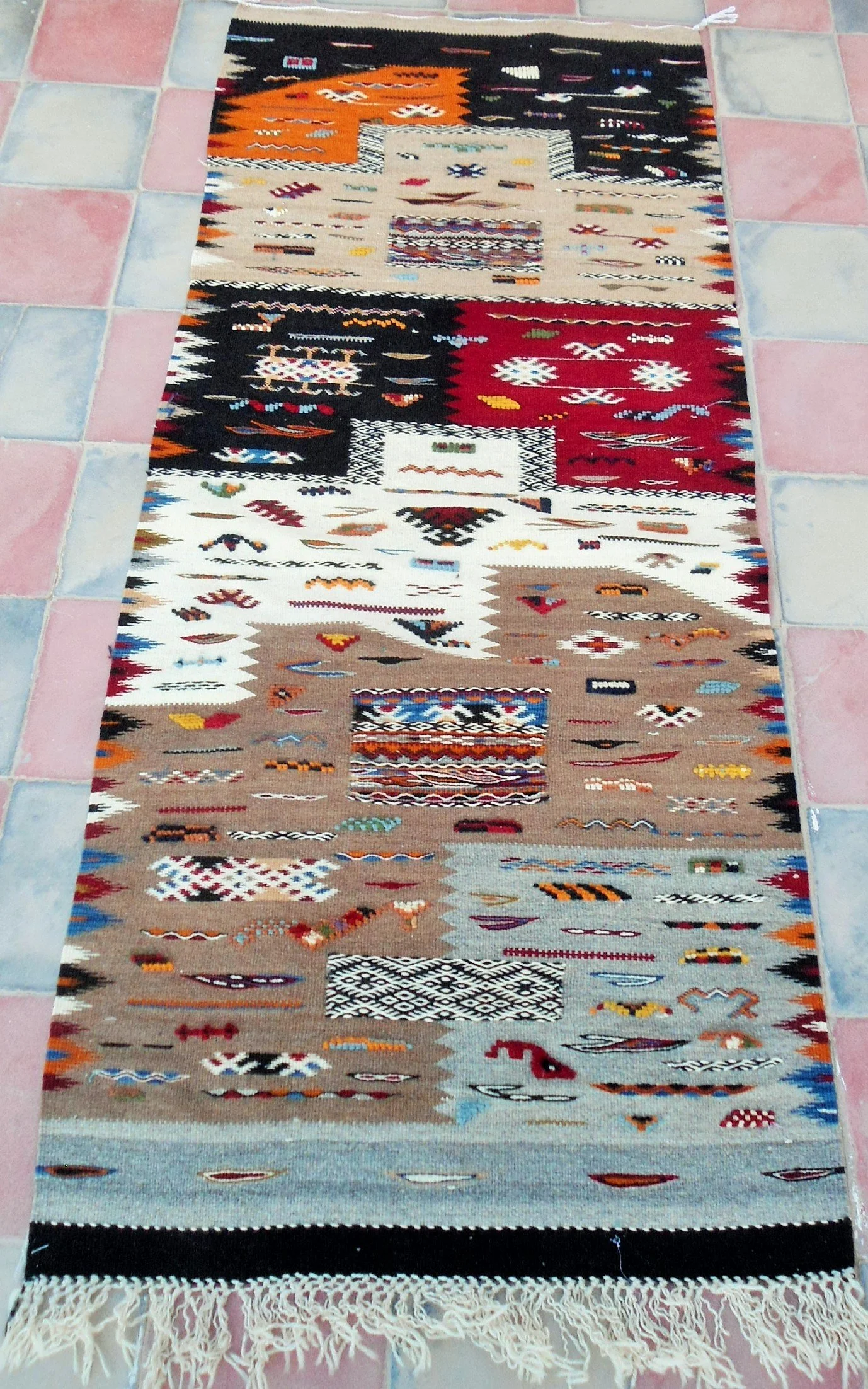
The cooperative works with women from the Ait Oughrada tribe and neighboring communities who weave from their homes using techniques passed down through generations. Their carpets are made entirely by hand, beginning with wool from local Sirwa mountain sheep. The wool is washed, combed, hand-spun, and dyed using plant- and mineral-based dyes sourced from the region, including saffron, henna, walnut, indigo, and madder root.
Designs draw from historic Amazigh carpets and from the surrounding landscape of the Sirwa Mountains. Motifs are geometric and symbolic, reflecting protection, fertility, family, and connection to the land. Colors are chosen deliberately and carry meaning, with reds, blacks, and earth tones recurring across many pieces. Women plan and weave these patterns on vertical looms without mechanical assistance, ensuring that each carpet reflects individual skill while remaining grounded in shared tradition.
Timnay was formed to preserve this weaving knowledge while creating reliable income for women in rural villages. Through the cooperative, women receive training in spinning, natural dyeing, and weaving, as well as access to healthcare support, group savings, childcare during work hours, and opportunities to take on leadership roles. Income from carpet sales allows women to support their households while remaining in their communities rather than migrating for work.
The cooperative operates as a collective system. A portion of each sale goes directly to the weaver, while another portion is reinvested in training, materials, and community needs. Young women are paid while learning, making it possible to develop skills without financial pressure. Knowledge is passed through shared work, conversation, and demonstration rather than formal instruction.
Materials are sourced locally whenever possible, and waste wool is reused in smaller pieces or incorporated into new work. The cooperative’s practices are shaped by availability of local resources and long-standing relationships with shepherds and suppliers in the Sirwa region.

.